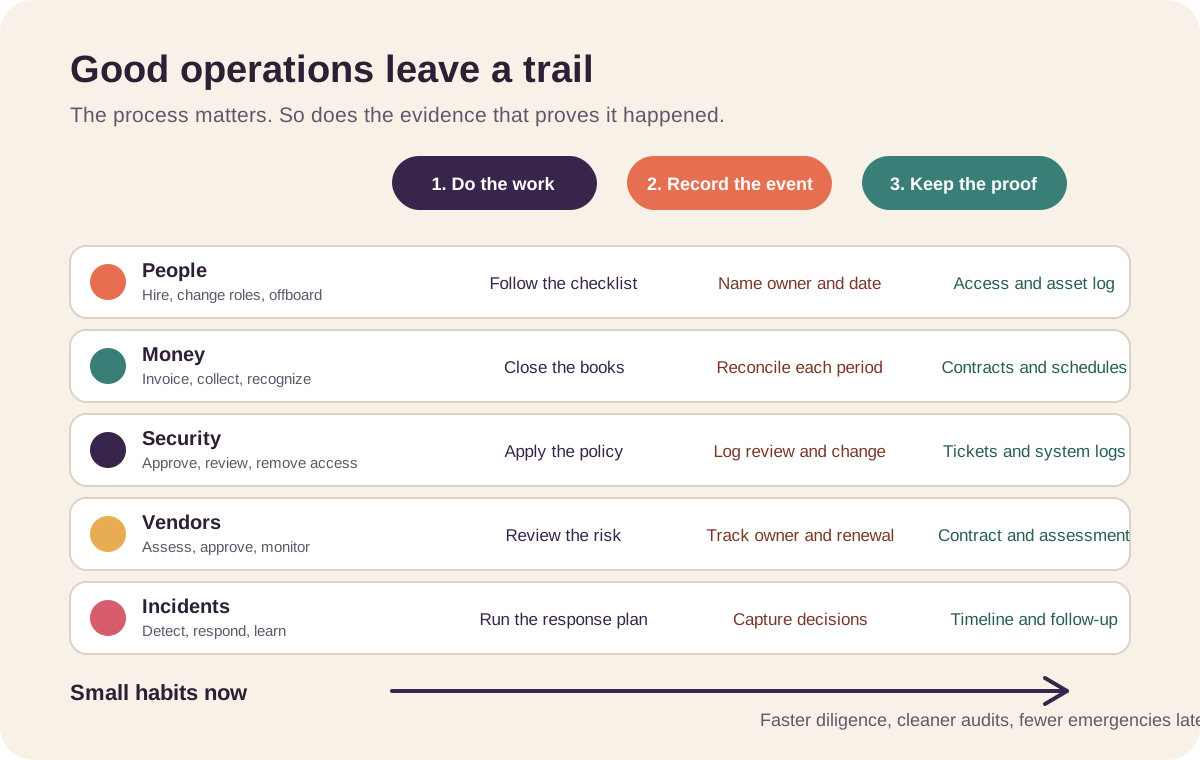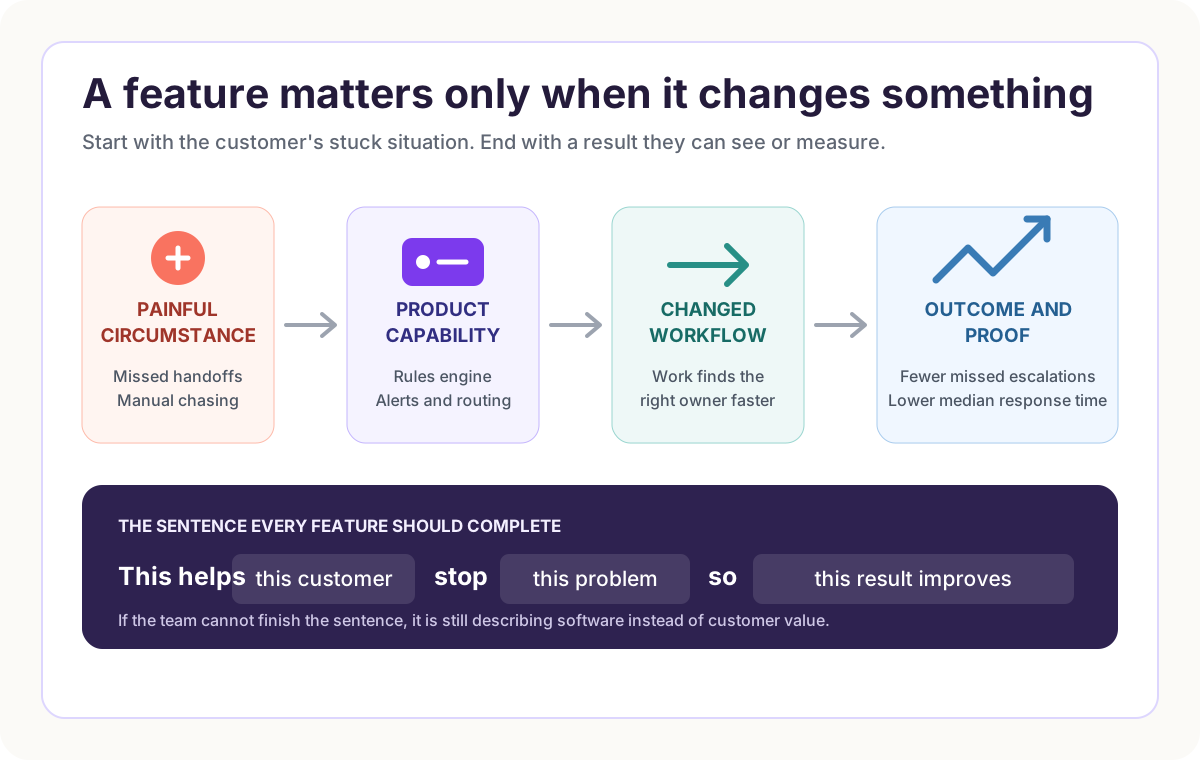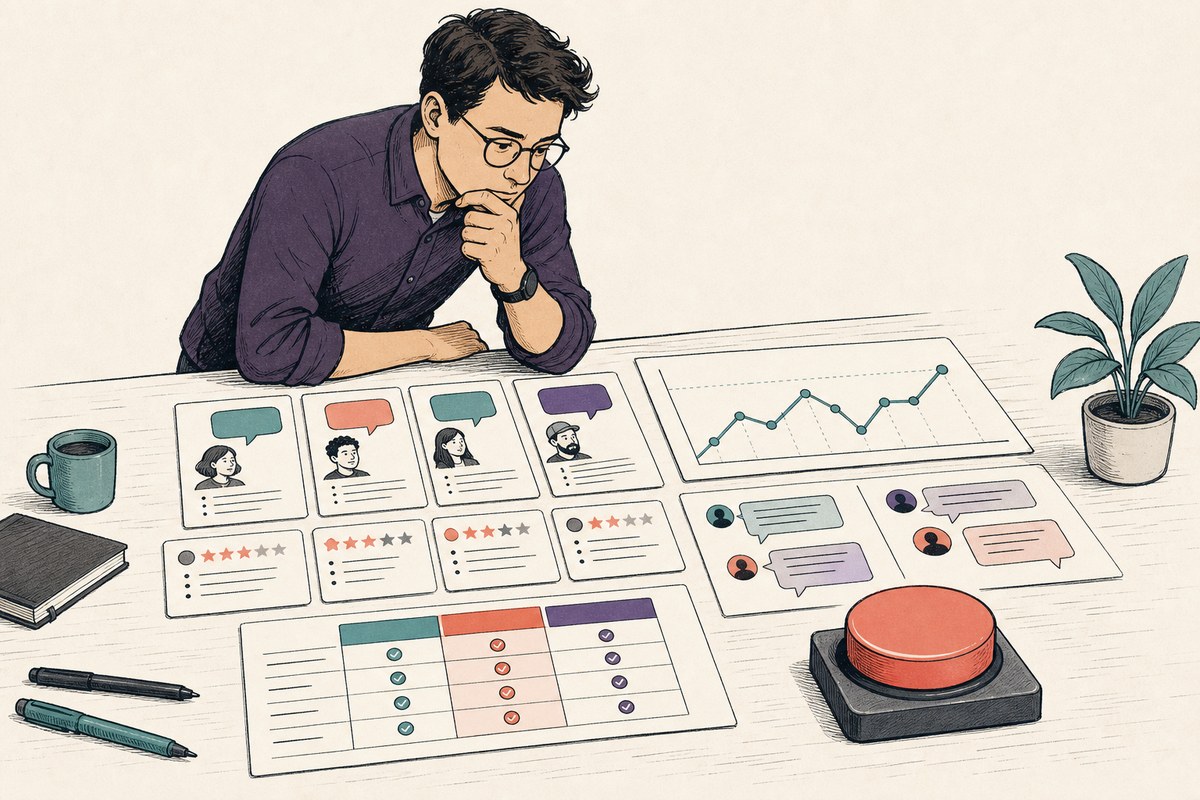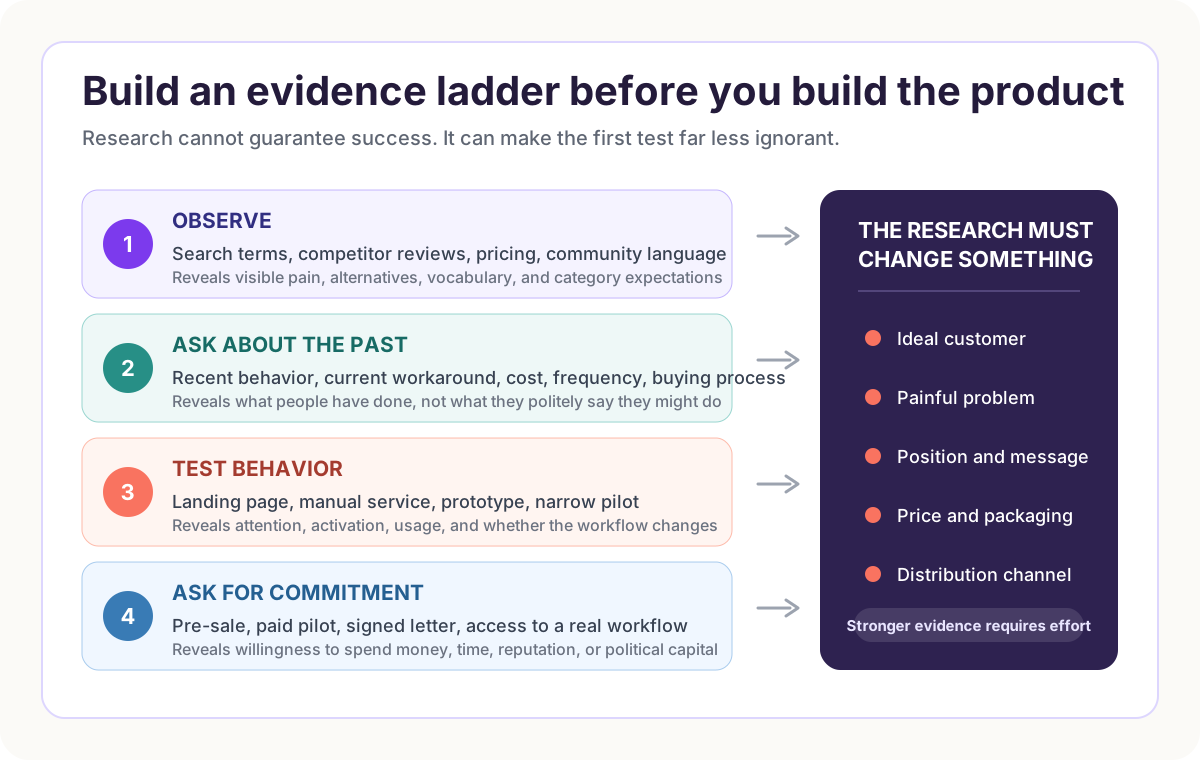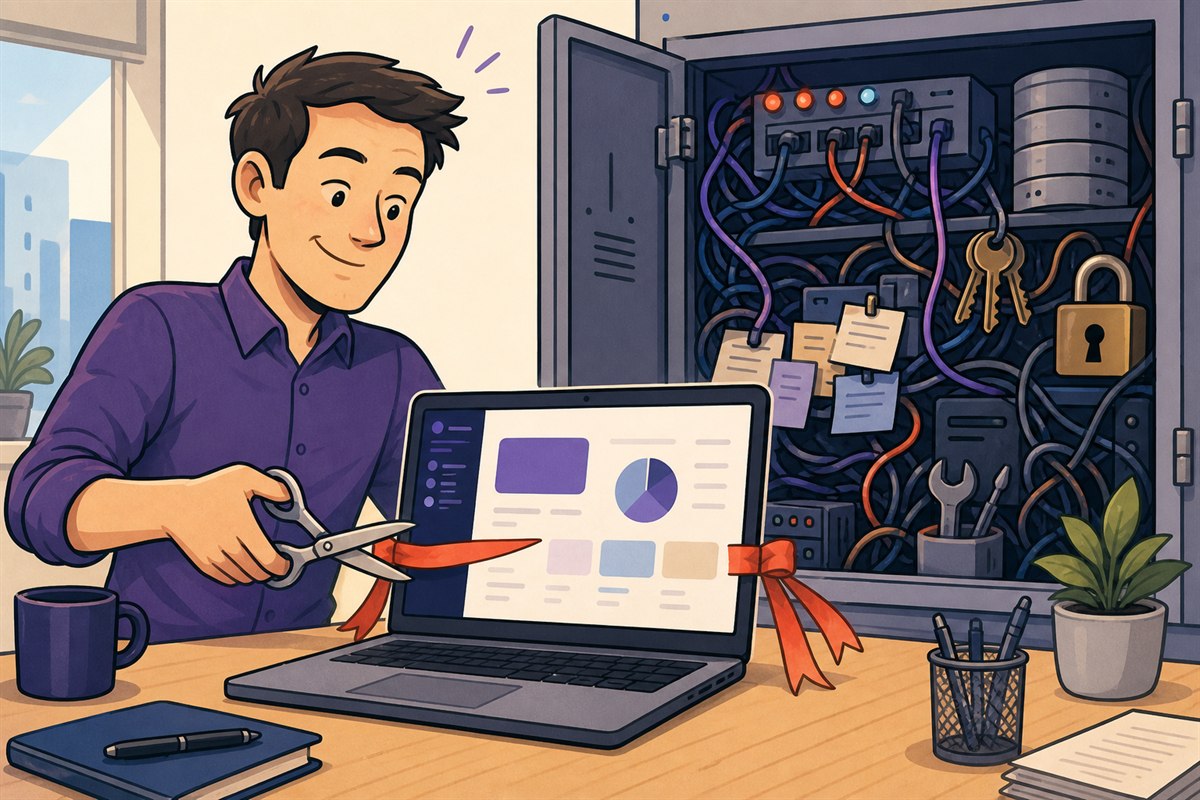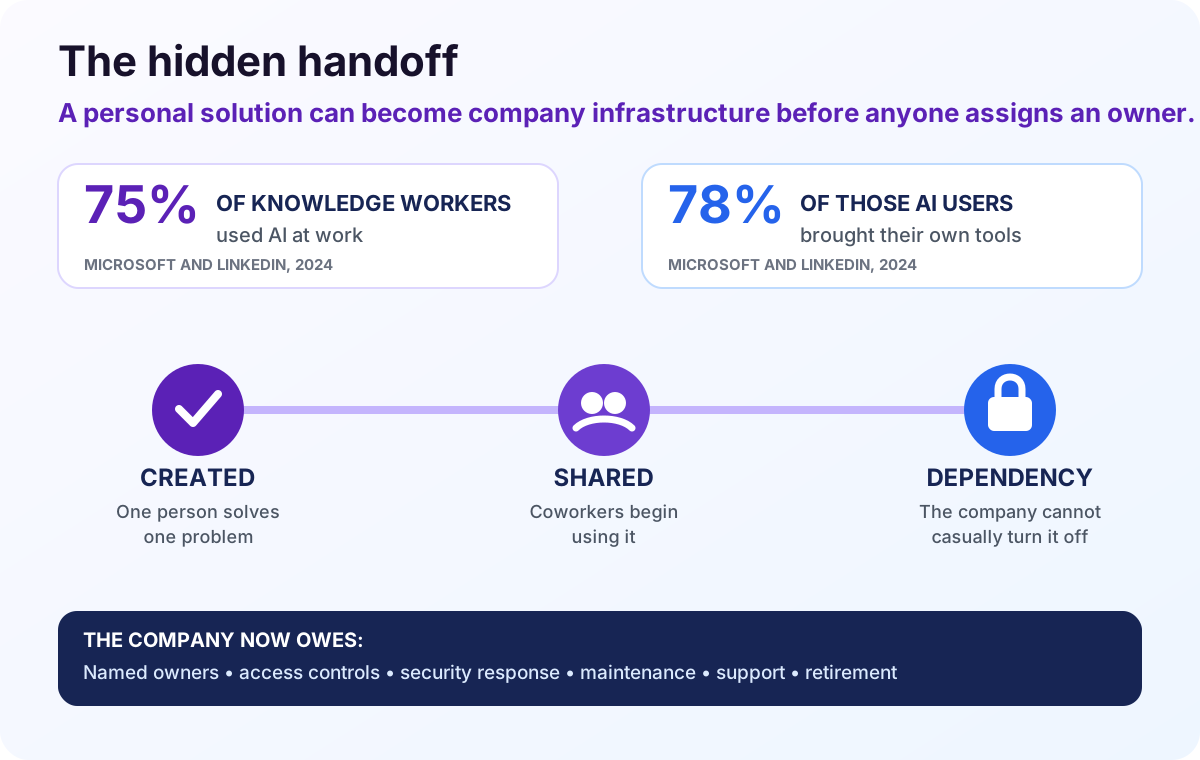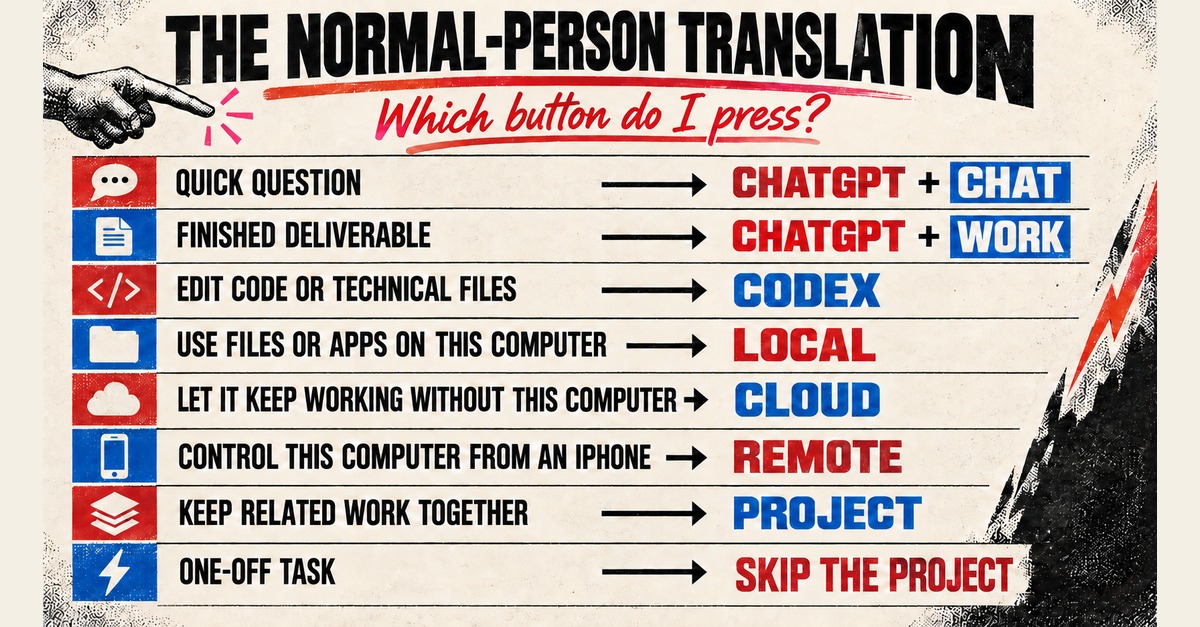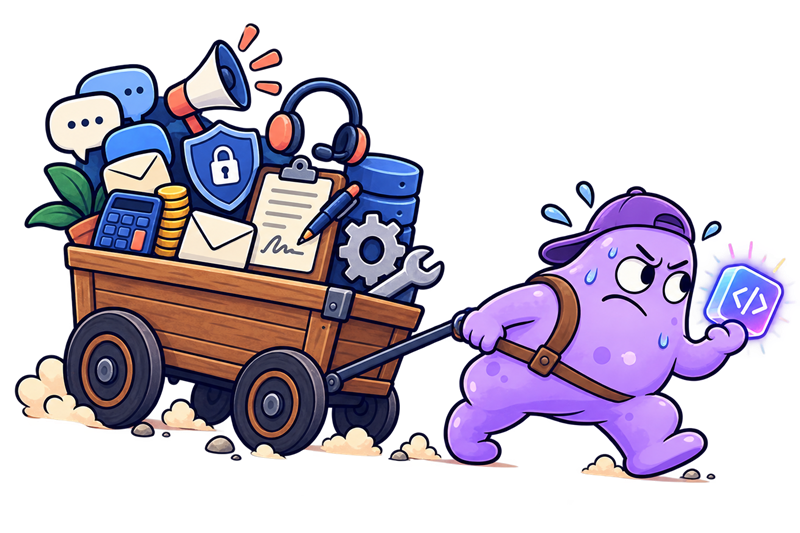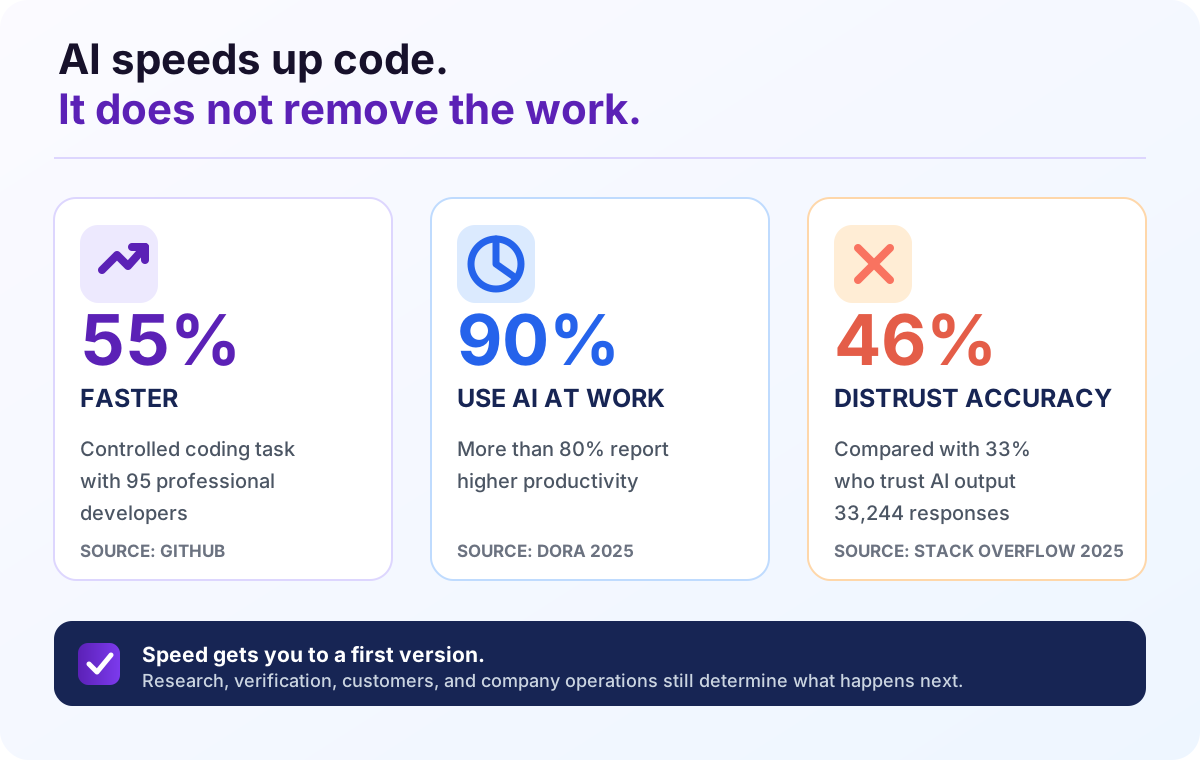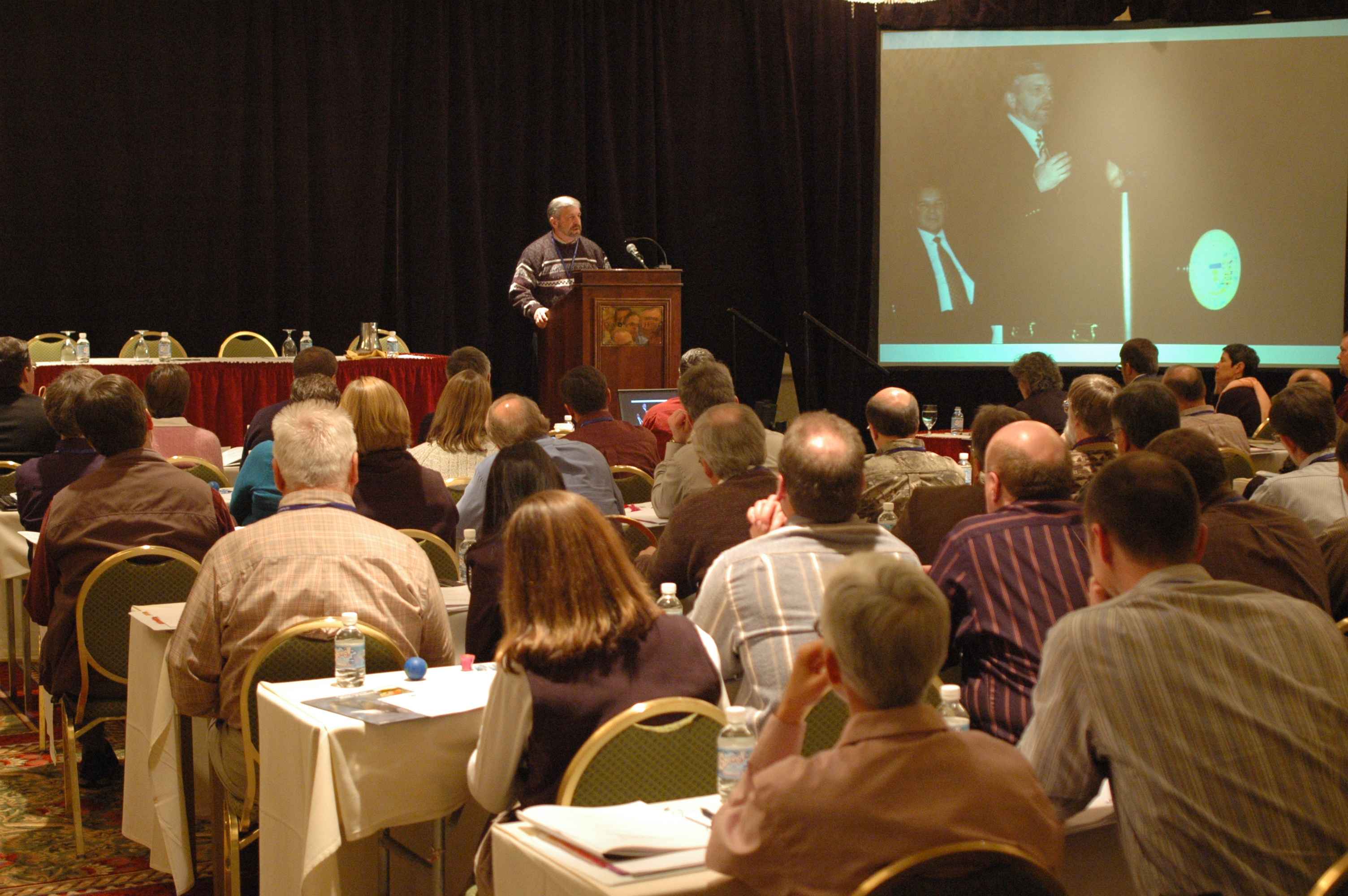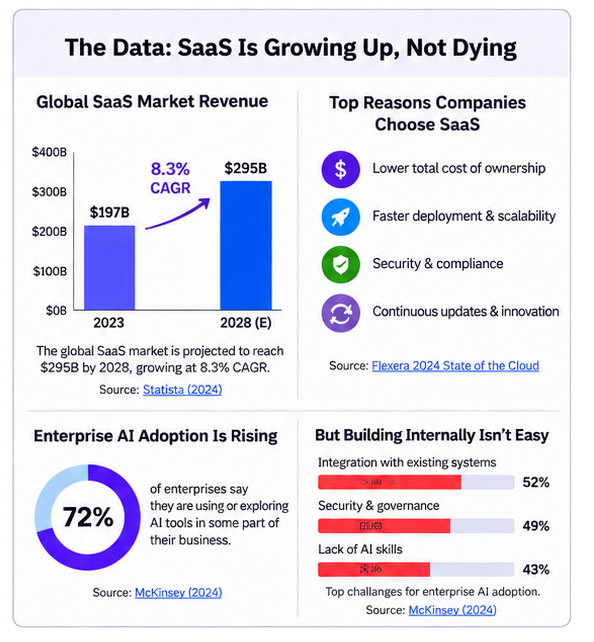
<?xml version="1.0" encoding="utf-8"?><feed xmlns="http://www.w3.org/2005/Atom"><generator uri="https://jekyllrb.com/" version="4.4.1">Jekyll</generator><link href="https://saasexperts.co/feed.xml" rel="self" type="application/atom+xml"/><link href="https://saasexperts.co/" rel="alternate" type="text/html"/><updated>2026-10-15T17:46:16+00:00</updated><id>https://saasexperts.co/feed.xml</id><title type="html">SaaS Experts</title><subtitle>A holding company for online products and services.</subtitle><author><name>Jasen Fici</name></author><entry><title type="html">Operate Like a Real Company Before You Feel Like One</title><link href="https://saasexperts.co/blog/operate-like-a-real-company-before-you-feel-like-one/" rel="alternate" type="text/html" title="Operate Like a Real Company Before You Feel Like One"/><published>2026-10-15T13:00:00+00:00</published><updated>2026-10-15T13:00:00+00:00</updated><id>https://saasexperts.co/blog/operate-like-a-real-company-before-you-feel-like-one</id><content type="html" xml:base="https://saasexperts.co/blog/operate-like-a-real-company-before-you-feel-like-one/"><![CDATA[<header class="thought-post-hero"> <figure class="thought-post-hero__art"> <img src="/assets/images/blogs/operate-real-company/operate-real-company-hero-v2.jpg" alt="An orderly desk with an access badge, ledger, checklist, calendar, and company records" width="1200" height="800"/> </figure> <div> <p class="thought-post-eyebrow">The buyer will not wait while you find the paperwork</p> <h1>Operate Like a Real Company<span>Before You Feel Like One</span></h1> <div class="thought-post-rule" aria-hidden="true"></div> <p class="thought-post-lead">The call can come before you feel ready: "We're interested in buying you." The company you can prove is the company you can sell.</p> <div class="thought-post-meta"> <span>October 15, 2026</span> <span>6 min read</span> </div> </div> </header> <section> <h2>The call does not arrive on your schedule</h2> <p>Most founders imagine selling the company as a decision they will make someday, once everything is polished and the timing feels right.</p> <p>That is a comforting fantasy.</p> <p>The real call can arrive in the middle of a messy quarter. A larger company noticed the product. A competitor wants the customers. Someone sees strategic value you did not know was visible. The opening sentence is exciting: "We're interested in buying you." The next conversation is considerably less romantic.</p> <p>Can you send three years of financials? Customer contracts? The cap table? Churn by cohort? Vendor agreements? Security policies? Proof that every employee and contractor assigned their intellectual property to the company?</p> <p>At that point, "I am pretty sure we have it somewhere" is a terrible answer.</p> <p><a href="https://www.cooleygo.com/prep-sell-getting-ready-ma-exit/">Cooley's guidance for companies preparing for an M&amp;A exit</a> makes the timing problem plain: once a buyer is interested, transactions can move quickly. The records need to be ready before the request arrives.</p> </section> <section> <h2>Time is the killer of deals</h2> <p>Every extra week creates another opportunity for something to change. Revenue slips. A large customer churns. The buyer's priorities move. A different acquisition appears. Someone on the buyer's side gets nervous. The people involved get tired of talking about the deal and start wondering whether they should be doing it at all.</p> <p>The problem with missing records is not merely that they look sloppy. They consume time, and time gives uncertainty room to grow.</p> <p><a href="https://www.mckinsey.com/capabilities/m-and-a/our-insights/leading-through-uncertainty-navigating-delays-in-m-and-a-deals">McKinsey's analysis of delayed acquisitions</a> focuses on much larger deals, but the damage it identifies is familiar at any size: delays erode value, distract the people running the business, weaken momentum, and exhaust everyone involved.</p> <p>A buyer may accept a known problem. A buyer can price a known risk. What buyers hate is discovering that every answer produces two more questions.</p> </section> <figure class="thought-post-infographic"> <img src="/assets/images/blogs/operate-real-company/operating-evidence-system.svg" alt="Infographic showing how a SaaS company should perform, record, and preserve evidence for people, money, security, vendor, and incident processes" width="1200" height="760"/> <figcaption>People, money, security, vendors, and incidents all leave records a buyer may eventually request. Keeping the evidence as the work happens turns months of reconstruction into answers you can provide quickly.</figcaption> </figure> <section> <h2>A buyer is not buying your explanation</h2> <p>Founders get very good at explaining why things are the way they are. The books are a little unusual because of that annual contract. The contractor definitely agreed that the company owns the code. The cap table is accurate once you understand which spreadsheet to ignore. The security process exists, although nobody has written it down.</p> <p>None of this sounds reassuring during diligence.</p> <p>A buyer is trying to determine what it owns, what it owes, what could break, and whether the story told during the courtship survives contact with the records. <a href="https://www.deloitte.com/us/en/what-we-do/capabilities/mergers-acquisitions/services/diligence-and-sell-side-advisory-services.html">Deloitte says a prepared seller can answer diligence questions faster</a>, strengthen credibility, and reduce disruption to the operating business.</p> <p>That credibility is part of the value. Clean records tell the buyer that the rest of the company may also be what you said it was.</p> </section> <section> <h2>You cannot recreate clean history under pressure</h2> <p>You can create a policy next week. You cannot honestly create evidence that the company followed it for the last three years.</p> <p>The same is true everywhere else. You cannot go back and get an intellectual-property assignment from a contractor who has disappeared. You cannot reconstruct every approval from Slack archaeology. You cannot make an unsigned customer agreement become signed by putting it in a very organized folder.</p> <p><a href="https://www.orrick.com/en/Insights/2024/08/Tech-Exit-Series-Preparing-a-Data-Room">Orrick recommends setting up the data room early</a> so sellers can identify and fix problems before buyer diligence begins. Its broader technology M&amp;A guidance warns that uncertainty about intellectual-property ownership can delay or derail a transaction or reduce its value.</p> <p>This is why you protect the exit from the beginning, even when you have no current plan to sell. Get signatures. Keep board and equity records current. Store contracts where somebody other than the founder can find them. Know who owns the code. Do the boring work while it is still boring.</p> </section> <section> <h2>Founder math will not survive diligence</h2> <p>An annual SaaS payment feels like revenue because the cash is sitting right there. Accounting does not care how emotionally available the money seems.</p> <p>Under ASC 606, companies identify the contract and performance obligations, determine and allocate the price, then recognize revenue as those obligations are satisfied. <a href="https://fasb.org/projects/recently-completed-projects/revenue-recognition-summary">FASB's revenue recognition overview</a> explains the standard and its history.</p> <p>Contract details matter. Deferred revenue matters. Consistent reporting matters. Do not wait for a buyer's quality-of-earnings team to discover that the revenue schedule depends on a spreadsheet named <em>final-revenue-v7-USE-THIS-ONE.xlsx</em>.</p> <p>Clean books let the buyer understand the company faster. They also reduce the chance that an avoidable surprise becomes a price reduction, another condition, or a reason to walk.</p> </section> <section> <h2>SOC 2 is useful rehearsal</h2> <p><a href="https://www.aicpa-cima.com/topic/audit-assurance/audit-and-assurance-greater-than-soc-2/">AICPA describes SOC 2</a> as an examination of controls relevant to security, availability, processing integrity, confidentiality, or privacy. In normal founder language, an outside party is going to ask the same rude question over and over: can you prove it?</p> <p>Your first audit may still feel like a slow death. Good operating habits determine whether it is merely painful or a full-scale apocalypse. More importantly, those habits teach the company to preserve evidence before acquisition diligence puts far more than a certification at stake.</p> <p>A SOC 2 report is not acquisition readiness by itself. It will not clean the cap table, find missing contracts, fix the books, or establish ownership of the software. It does help build the reflex a seller needs: do the work, record the event, and keep the proof.</p> </section> <section> <h2>Build the exit path while you build the company</h2> <p>You do not need to run a five-person SaaS company like General Electric. You do need a reliable home for the records that explain what the company owns, owes, earned, promised, protected, and approved.</p> <p>Keep the system simple. Update financials and revenue schedules every month. Store signed customer, vendor, employee, and contractor agreements. Maintain the cap table and corporate approvals. Record material security events and access changes. Keep policies honest enough that the team can follow them.</p> <p>This does not mean exposing sensitive material in a permanently open data room. It means keeping the underlying records organized and involving qualified legal, accounting, tax, and security advisors when an actual transaction becomes possible.</p> <p>You may never sell. Fine. The same habits make the company easier to operate, finance, audit, and survive. But if that call does come, you will not be trying to build three years of credibility in three weeks.</p> </section> <aside class="thought-post-bottom-line" aria-labelledby="operate-real-company-bottom-line-title"> <h2 id="operate-real-company-bottom-line-title">Protect the deal before it exists</h2> <ul> <li>Run the company as though a serious buyer could ask for proof tomorrow.</li> <li>Keep financial, legal, ownership, security, and operating records current while the history is still happening.</li> <li>When the call comes, spend the limited time moving the deal forward instead of searching for evidence that should already exist.</li> </ul> </aside> <section class="search-intent-faq" aria-labelledby="search-intent-faq-title"> <h2 id="search-intent-faq-title">Questions founders ask about preparing a SaaS company for acquisition</h2> <div class="search-intent-faq__items"> <details class="search-intent-faq__item"> <summary>How do I prepare my SaaS company for acquisition?</summary> <div class="search-intent-faq__answer"><p>Run the company so its important claims can be verified quickly. Maintain accurate financial statements and revenue schedules, signed customer and vendor contracts, current cap-table records, employee and contractor agreements, intellectual-property assignments, security policies, access records, and documented operating procedures. Review the material regularly instead of assembling it after a buyer calls.</p> </div> </details> <details class="search-intent-faq__item"> <summary>What documents do buyers request when acquiring a SaaS company?</summary> <div class="search-intent-faq__answer"><p>Requests vary by buyer and transaction, but diligence commonly covers financial statements, tax records, revenue and customer metrics, customer and vendor agreements, corporate records, capitalization, employment arrangements, intellectual-property ownership, technology, security, privacy, litigation, and regulatory compliance. Legal and financial advisors should tailor the list to the company and proposed transaction.</p> </div> </details> <details class="search-intent-faq__item"> <summary>When should a startup prepare an M&amp;A data room?</summary> <div class="search-intent-faq__answer"><p>Keep acquisition-relevant records organized from the beginning, then establish a formal, access-controlled data room when an exit becomes realistic or advisors recommend it. Preparing early exposes missing signatures, ownership problems, and inconsistent records while there is still time to fix them. Sensitive information should only be shared under appropriate legal guidance and access controls.</p> </div> </details> <details class="search-intent-faq__item"> <summary>Does SOC 2 help when selling a SaaS company?</summary> <div class="search-intent-faq__answer"><p>A SOC 2 report does not guarantee a sale, but the habits behind it can make security diligence easier. Buyers may still examine policies, access controls, incident history, vendors, data handling, and evidence that controls actually operated. Even without a completed SOC 2 examination, consistent security records reduce the amount the company must reconstruct under deal pressure.</p> </div> </details> </div> </section> <section class="thought-post-sources" aria-labelledby="operate-real-company-sources-title"> <h2 id="operate-real-company-sources-title">Sources and further reading</h2> <ol> <li><a href="https://www.cooleygo.com/prep-sell-getting-ready-ma-exit/">Cooley GO, Prep to Sell: Getting Ready for an M&amp;A Exit</a></li> <li><a href="https://www.orrick.com/en/Insights/2024/08/Tech-Exit-Series-Preparing-a-Data-Room">Orrick, Tech Exit Series: Preparing a Data Room</a></li> <li><a href="https://www.deloitte.com/us/en/what-we-do/capabilities/mergers-acquisitions/services/diligence-and-sell-side-advisory-services.html">Deloitte, Diligence and Sell-Side Advisory Services</a></li> <li><a href="https://www.mckinsey.com/capabilities/m-and-a/our-insights/leading-through-uncertainty-navigating-delays-in-m-and-a-deals">McKinsey &amp; Company, Navigating Delays in M&amp;A Deals</a></li> <li><a href="https://www.aicpa-cima.com/topic/audit-assurance/audit-and-assurance-greater-than-soc-2/">AICPA &amp; CIMA, SOC 2 Trust Services Criteria Resources</a></li> <li><a href="https://fasb.org/projects/recently-completed-projects/revenue-recognition-summary">FASB, Revenue Recognition Project Summary</a></li> </ol> </section>]]></content><author><name>Jasen Fici</name></author><category term="blog"/><category term="saas"/><category term="operations"/><category term="acquisitions"/><summary type="html"><![CDATA[The acquisition call rarely arrives on your timetable. Clean records, contracts, books, and security evidence keep diligence moving before delay and doubt kill the deal.]]></summary></entry><entry><title type="html">Nobody Wants Your Software. They Want the Problem Gone.</title><link href="https://saasexperts.co/blog/nobody-wants-your-software-they-want-the-problem-gone/" rel="alternate" type="text/html" title="Nobody Wants Your Software. They Want the Problem Gone."/><published>2026-10-08T13:00:00+00:00</published><updated>2026-10-08T13:00:00+00:00</updated><id>https://saasexperts.co/blog/nobody-wants-your-software-they-want-the-problem-gone</id><content type="html" xml:base="https://saasexperts.co/blog/nobody-wants-your-software-they-want-the-problem-gone/"><![CDATA[<header class="thought-post-hero"> <figure class="thought-post-hero__art"> <img src="/assets/images/blogs/problem-gone/problem-gone-hero-v2.jpg" alt="A dense tangle of utility lines, representing the complicated workflow a customer wants removed" width="1200" height="800"/> <figcaption class="thought-post-hero__credit">Photograph by <a href="https://commons.wikimedia.org/wiki/File:20090510_Shanghai_Jiangxi_road_wires.jpg">Jakub Hałun via Wikimedia Commons</a>. CC0.</figcaption> </figure> <div> <p class="thought-post-eyebrow">Nobody woke up hoping to buy another dashboard</p> <h1>Nobody Wants Your Software.<span>They Want the Problem Gone.</span></h1> <div class="thought-post-rule" aria-hidden="true"></div> <p class="thought-post-lead">Customers do not want software. They want one irritating, expensive problem to stop ruining their Tuesday.</p> <div class="thought-post-meta"> <span>October 8, 2026</span> <span>5 min read</span> </div> </div> </header> <section> <h2>Founders see proof of work</h2> <p>Every feature has a dramatic backstory inside the company. Someone argued for it, designed it, built it, broke it, fixed it, documented it, and dragged it across the finish line. By launch day, we are emotionally invested. Look at this beautiful thing. Do you have any idea what it took to make the permissions work?</p> <p>The customer does not care. They see another screen, another login, another implementation, and another vendor asking for money.</p> <p>That is why a technically impressive product can be strangely difficult to sell. The founder is proudly presenting an accomplishment. The buyer is quietly calculating whether the problem is painful enough to sit through another onboarding call.</p> </section> <section> <h2>The customer started somewhere else</h2> <p>The customer did not wake up hoping to buy a dashboard. Something happened. A handoff failed. A report took three days. An important request disappeared into a shared inbox. An audit exposed a mess. A customer became angry. A manager got tired of asking the same question every Friday and receiving seven slightly different spreadsheets.</p> <p><a href="https://www.christenseninstitute.org/theory/jobs-to-be-done/">The Christensen Institute's Jobs to Be Done theory</a> describes products as things people pull into their lives to make progress in a particular circumstance. That circumstance explains the purchase better than the product category or a list of attributes.</p> <p>For SaaS, the ugly workflow and its consequence come first. The software is merely how the mess stops happening.</p> </section> <figure class="thought-post-infographic"> <img src="/assets/images/blogs/problem-gone/features-to-outcomes.svg" alt="Infographic translating a painful customer circumstance through a SaaS product capability and changed workflow into a measurable business outcome" width="1200" height="760"/> <figcaption>The founder's job is to connect a capability to a changed workflow and a result the customer can recognize. The framework draws on Jobs to Be Done and value proposition research about customer jobs, pains, and gains.</figcaption> </figure> <section> <h2>Make every feature survive "so what?"</h2> <p>Automated routing is a feature. Less manual triage is a benefit. Fewer missed escalations and a shorter response time are outcomes.</p> <p>Those distinctions sound obvious until you read most SaaS homepages. "Advanced analytics," "seamless integrations," and "AI-powered automation" describe the product while leaving the buyer to do the hard part: figuring out why any of it matters.</p> <p>A good explanation completes the chain: this capability changes this part of the workflow, which improves this result, which matters because the current problem costs the customer time, money, trust, or control.</p> </section> <section> <h2>Vague benefits are features wearing nicer clothes</h2> <p>"Save time" and "streamline operations" are features wearing a blazer. Almost every software company can say them, and neither tells the buyer what will actually change.</p> <p>Ask how the customer measures the problem now. Minutes to first response. Hours spent reconciling reports. Incidents missed. Deals delayed. Days required to onboard an employee. It does not always need to become a perfect ROI calculation, but it should be concrete enough that the buyer can recognize improvement.</p> <p><a href="https://www.strategyzer.com/library/the-high-value-customer-jobs-you-need-to-focus-on">Strategyzer recommends focusing on customer jobs that are important, tangible, unsatisfied, and economically attractive</a>. That is a better road map filter than the number of times a feature was requested.</p> </section> <section> <h2>The outcome also changes the product</h2> <p>Outcome language is not marketing cologne sprayed on the product after development. If the desired result is fewer missed escalations, the product needs reliable routing, clear ownership, useful alerts, auditability, and reporting that proves the improvement. A beautiful dashboard that does not change the handoff is decoration.</p> <p><a href="https://hbr.org/2016/09/know-your-customers-jobs-to-be-done">Clayton Christensen and his coauthors argued in Harvard Business Review</a> that companies struggle when they collect data about customers without understanding why those customers make a choice. The same mistake happens when a product team measures feature use without asking whether the customer's situation improved.</p> <p>The problem should shape the message, the road map, onboarding, support, and the proof you show at renewal. If it only appears in the headline, you are not selling an outcome. You are decorating a feature list.</p> </section> <aside class="thought-post-bottom-line" aria-labelledby="problem-gone-bottom-line-title"> <h2 id="problem-gone-bottom-line-title">Sell the changed situation</h2> <ul> <li>Start with the event or workflow that made the customer look for help.</li> <li>Connect every important feature to a visible change and a result.</li> <li>If the customer cannot explain what improves, the feature list is not doing the selling.</li> </ul> </aside> <section class="search-intent-faq" aria-labelledby="search-intent-faq-title"> <h2 id="search-intent-faq-title">Questions founders ask about selling SaaS outcomes</h2> <div class="search-intent-faq__items"> <details class="search-intent-faq__item"> <summary>How do you sell SaaS outcomes instead of features?</summary> <div class="search-intent-faq__answer"><p>Begin with the customer’s current problem and its cost. Explain the workflow change your product creates, then connect that change to a result the buyer already measures. Features belong in the proof. They should not force the buyer to invent the business case for you.</p> </div> </details> <details class="search-intent-faq__item"> <summary>What is the difference between a SaaS feature and a benefit?</summary> <div class="search-intent-faq__answer"><p>A feature is something the product does, such as automated routing. A benefit is the improvement that capability creates for the user, such as less manual triage. An outcome is the business result, such as faster response times or fewer missed escalations.</p> </div> </details> <details class="search-intent-faq__item"> <summary>How do you identify real customer pain points?</summary> <div class="search-intent-faq__answer"><p>Ask customers about recent events, current workarounds, delays, errors, risks, and the consequences of leaving the problem alone. Look for pains that are frequent, expensive, visible to management, or tied to an existing budget. A complaint is more useful when it changes behavior.</p> </div> </details> <details class="search-intent-faq__item"> <summary>Do customers care about software features?</summary> <div class="search-intent-faq__answer"><p>Yes, after they understand why the product matters. Features help buyers compare options, evaluate fit, and trust that a promised outcome is achievable. A feature list without customer context asks the buyer to do too much translation and usually makes the product easier to compare on price.</p> </div> </details> </div> </section> <section class="thought-post-sources" aria-labelledby="problem-gone-sources-title"> <h2 id="problem-gone-sources-title">Sources and further reading</h2> <ol> <li><a href="https://www.christenseninstitute.org/theory/jobs-to-be-done/">Christensen Institute, Jobs to Be Done theory</a></li> <li><a href="https://www.strategyzer.com/library/the-high-value-customer-jobs-you-need-to-focus-on">Strategyzer, identifying high-value customer jobs</a></li> <li><a href="https://hbr.org/2016/09/know-your-customers-jobs-to-be-done">Harvard Business Review, Know Your Customers' Jobs to Be Done</a></li> </ol> </section>]]></content><author><name>Jasen Fici</name></author><category term="blog"/><category term="saas"/><category term="product strategy"/><category term="positioning"/><summary type="html"><![CDATA[Customers do not buy SaaS features for their own sake. They buy a change in an irritating, expensive, or risky situation.]]></summary></entry><entry><title type="html">Stop Treating the Market Like Something You Discover After Launch</title><link href="https://saasexperts.co/blog/stop-treating-market-like-something-you-discover-after-launch/" rel="alternate" type="text/html" title="Stop Treating the Market Like Something You Discover After Launch"/><published>2026-10-01T13:00:00+00:00</published><updated>2026-10-01T13:00:00+00:00</updated><id>https://saasexperts.co/blog/stop-treating-market-like-something-you-discover-after-launch</id><content type="html" xml:base="https://saasexperts.co/blog/stop-treating-market-like-something-you-discover-after-launch/"><![CDATA[<header class="thought-post-hero"> <figure class="thought-post-hero__art"> <img src="/assets/images/blogs/market-before-launch/market-before-launch-hero.jpg" alt="A founder studies customer interviews, competitor reviews, pricing, search behavior, and community discussions before pressing a launch button" width="1200" height="800"/> </figure> <div> <p class="thought-post-eyebrow">Launch should test your position, not invent it</p> <h1>Stop Treating the Market Like Something<span>You Discover After Launch</span></h1> <div class="thought-post-rule" aria-hidden="true"></div> <p class="thought-post-lead">You will learn plenty after launch. That is no excuse to arrive without studying the customer, competition, price, or path to the buyer.</p> <div class="thought-post-meta"> <span>October 1, 2026</span> <span>5 min read</span> </div> </div> </header> <section> <h2>Building first feels productive</h2> <p>Founders who can build software have a dangerous place to hide. Code gives us visible progress. We can finish a screen, close a ticket, fix a bug, and point to something that did not exist yesterday.</p> <p>Market research is less satisfying. It produces notes, contradictions, uncomfortable questions, and reasons to change an idea we already like.</p> <p>I understand the urge to start building. Velaro and StatusCast each took me close to a year to write by hand before they reached the market. When the first version carries that much time and risk, trial by fire is an excruciating research method. The fact that AI can shorten the build now makes uninformed development less defensible, not more.</p> </section> <section> <h2>You can know more than founders pretend</h2> <p>You can read hundreds of competitor reviews and sort complaints by customer type, workflow, and severity. You can compare pricing, packaging, positioning, integrations, documentation, and release histories. Search results reveal the words buyers use. Community discussions reveal the workarounds they tolerate and the places where they ask for help.</p> <p><a href="https://online.hbs.edu/blog/post/how-to-do-market-research-for-a-startup">Harvard Business School's startup market research guidance</a> separates this into secondary research, using existing market and competitor information, and primary research gathered directly through interviews, surveys, and other customer contact. Both are available before a founder writes much code.</p> <p>None of that proves the product will work. It does give you a better starting position than a blank page and personal enthusiasm.</p> </section> <figure class="thought-post-infographic"> <img src="/assets/images/blogs/market-before-launch/evidence-before-code.svg" alt="Infographic showing a four-step evidence ladder from observing search terms, reviews, and pricing to customer interviews, behavioral tests, and paid commitments, all informing the customer, problem, position, price, and distribution channel" width="1200" height="760"/> <figcaption>Market evidence gets stronger as the customer has to do more than offer an opinion. The ladder combines the primary and secondary research methods described by Harvard Business School with Strategyzer's distinction between opinions, observed behavior, and commitment.</figcaption> </figure> <section> <h2>Research should force you to take a position</h2> <p>A useful research phase ends with choices. Who is the first customer? Which problem is painful enough to deserve a budget? What do they call it? Which alternative are they replacing? Why would they trust you? What price fits the value and the buying process? Where can you reach them without lighting money on fire?</p> <p>If the answer is still "everyone who needs better software," you have collected information without making a decision.</p> <p>Your initial position will be wrong in places. That is expected. It should still be specific enough that a launch can challenge it.</p> </section> <section> <h2>Do not ask customers to approve your idea</h2> <p>Founders ruin customer interviews by turning them into polite sales calls. "Would you use this?" and "Do you like this idea?" invite encouragement, not evidence.</p> <p><a href="https://www.strategyzer.com/library/the-one-biggest-error-in-customer-interviews-mistaking-opinions-for-facts">Strategyzer warns against mistaking customer opinions for facts</a>. Ask about the last time the problem happened. What did the customer do? What did it cost? Who noticed? Which workaround did they use? Why have they not replaced it already?</p> <p>Past behavior is imperfect evidence. It is still more useful than a compliment about a hypothetical product.</p> </section> <section> <h2>You still have to launch</h2> <p>Research can become another hiding place. You cannot interview your way to retention, and no competitive spreadsheet can predict every objection or edge case.</p> <p>The point is to arrive at development with a set of informed assumptions. Build the smallest credible test of the riskiest one. Watch what customers do. Ask for a commitment that costs them something. Change the position while the cost of changing it is still low.</p> <p><a href="https://online.hbs.edu/blog/post/how-to-find-product-market-fit">Harvard's product-market fit guidance</a> makes the same distinction: market research begins the process, but the hypotheses have to keep changing as the product meets real customers.</p> </section> <aside class="thought-post-bottom-line" aria-labelledby="market-before-launch-bottom-line-title"> <h2 id="market-before-launch-bottom-line-title">Do the cheap learning first</h2> <ul> <li>Research the customer, problem, alternatives, price, and distribution before committing to the build.</li> <li>Ask customers about real behavior, not whether they like your idea.</li> <li>Use launch to test a specific position. Do not use it to discover that you never had one.</li> </ul> </aside> <section class="search-intent-faq" aria-labelledby="search-intent-faq-title"> <h2 id="search-intent-faq-title">Questions founders ask about SaaS market research</h2> <div class="search-intent-faq__items"> <details class="search-intent-faq__item"> <summary>How do you validate a SaaS idea before building it?</summary> <div class="search-intent-faq__answer"><p>Define a narrow customer and problem, then look for evidence in search behavior, reviews, communities, existing workarounds, and customer interviews. Test the riskiest assumptions with a landing page, manual service, prototype, or paid pilot before committing to a full product.</p> </div> </details> <details class="search-intent-faq__item"> <summary>How much market research should a startup do before launching?</summary> <div class="search-intent-faq__answer"><p>Enough to form specific, testable assumptions about the customer, problem, position, price, and distribution channel. Research should not become an excuse to postpone contact with the market. A few focused weeks can narrow the field, after which small real-world tests should take over.</p> </div> </details> <details class="search-intent-faq__item"> <summary>What should SaaS competitor research include?</summary> <div class="search-intent-faq__answer"><p>Study pricing and packaging, product documentation, customer reviews, support complaints, positioning, integrations, and the channels competitors use to reach buyers. Pay close attention to what customers dislike and the workarounds they still maintain. Those gaps are often more useful than a feature checklist.</p> </div> </details> <details class="search-intent-faq__item"> <summary>Can you prove product-market fit before launch?</summary> <div class="search-intent-faq__answer"><p>No. Product-market fit depends on real usage, retention, and willingness to pay over time. Pre-launch research can show that a painful problem exists and that a specific group is willing to test or buy a solution. It reduces ignorance, but the market still gets the final vote.</p> </div> </details> </div> </section> <section class="thought-post-sources" aria-labelledby="market-before-launch-sources-title"> <h2 id="market-before-launch-sources-title">Sources and further reading</h2> <ol> <li><a href="https://online.hbs.edu/blog/post/how-to-do-market-research-for-a-startup">Harvard Business School, how to conduct market research for a startup</a></li> <li><a href="https://www.strategyzer.com/library/the-one-biggest-error-in-customer-interviews-mistaking-opinions-for-facts">Strategyzer, mistaking opinions for facts in customer interviews</a></li> <li><a href="https://online.hbs.edu/blog/post/how-to-find-product-market-fit">Harvard Business School, finding product-market fit in technology</a></li> </ol> </section>]]></content><author><name>Jasen Fici</name></author><category term="blog"/><category term="saas"/><category term="startups"/><category term="market research"/><summary type="html"><![CDATA[SaaS founders can research customers, competitors, pricing, positioning, and distribution before launch. Shipping should test an informed position, not an uninformed guess.]]></summary></entry><entry><title type="html">AI Is Creating a Generation of Accidental Software Owners</title><link href="https://saasexperts.co/blog/ai-is-creating-accidental-software-owners/" rel="alternate" type="text/html" title="AI Is Creating a Generation of Accidental Software Owners"/><published>2026-09-24T13:00:00+00:00</published><updated>2026-09-24T13:00:00+00:00</updated><id>https://saasexperts.co/blog/ai-is-creating-accidental-software-owners</id><content type="html" xml:base="https://saasexperts.co/blog/ai-is-creating-accidental-software-owners/"><![CDATA[<header class="thought-post-hero"> <figure class="thought-post-hero__art"> <img src="/assets/images/blogs/accidental-software-owners/accidental-software-owner-hero.jpg" alt="An employee launches an internal application while a cabinet of tangled integrations, permissions, security, and maintenance work sits behind it" width="1200" height="800"/> </figure> <div> <p class="thought-post-eyebrow">Congratulations on the app. Who owns it on Tuesday?</p> <h1>AI Is Creating a Generation of<span>Accidental Software Owners</span></h1> <div class="thought-post-rule" aria-hidden="true"></div> <p class="thought-post-lead">An employee solves a problem with AI and shares the link. Five minutes later, the company owns production software nobody planned to maintain.</p> <div class="thought-post-meta"> <span>September 24, 2026</span> <span>5 min read</span> </div> </div> </header> <section> <h2>The celebration happens too early</h2> <p>Someone in finance, marketing, support, or operations gets tired of waiting for an internal tool. They open an AI builder, describe the problem, connect a spreadsheet or database, and have something useful by the end of the day.</p> <p>The demo works. A few coworkers ask for access. The person who built it gets congratulated for moving quickly. There is probably a Slack thread containing several fire emojis.</p> <p>Then everyone moves on without asking the boring questions. Who controls the permissions? What data is being stored? Which systems does it depend on? Who answers the support messages? What happens when the person who built it changes jobs, forgets the password, or simply stops enjoying their new unpaid career in software support?</p> <p>The application may have been created casually. The responsibility becomes real the moment another employee depends on it. Adoption is the line between a clever experiment and a company problem.</p> </section> <section> <h2>This is already happening at scale</h2> <p><a href="https://www.microsoft.com/en-us/worklab/work-trend-index/ai-at-work-is-here-now-comes-the-hard-part">Microsoft and LinkedIn's 2024 Work Trend Index</a>, based on 31,000 people across 31 countries, found that 75 percent of knowledge workers used AI at work. Among those users, 78 percent brought their own AI tools rather than waiting for their employer.</p> <p>That same instinct now applies to software. People do not need to open a procurement request or wait for an engineering sprint. They can make the thing themselves, which is both genuinely useful and how every good horror movie begins.</p> <p><a href="https://learn.microsoft.com/en-us/power-platform/guidance/adoption/manage-default-environment">Microsoft's own Power Platform governance guidance</a> warns that growing adoption produces ownerless and unused apps. When a maker leaves, the apps and workflows they created can become ownerless. Widely used apps that skip proper lifecycle management create business continuity risk.</p> </section> <figure class="thought-post-infographic"> <img src="/assets/images/blogs/accidental-software-owners/the-hidden-handoff.svg" alt="Infographic showing that workplace AI adoption leads from an employee-created app to a shared business dependency and then to company responsibilities for ownership, access, security, maintenance, support, and retirement" width="1200" height="760"/> <figcaption>The handoff usually happens without a meeting. A personal solution becomes company infrastructure when other people begin relying on it.</figcaption> </figure> <section> <h2>Every shortcut creates a list of obligations</h2> <p>The tool needs credentials. Those credentials need to be stored and rotated. The data needs rules about who can read, change, export, and delete it. Every integration can change without warning. Every dependency can introduce a vulnerability. Someone has to test updates, investigate failures, and decide when the application should be retired. "It is just an internal tool" does not perform any of those jobs.</p> <p><a href="https://csrc.nist.gov/pubs/sp/800/218/final">NIST's Secure Software Development Framework</a> makes the point plainly: security practices belong throughout the software lifecycle. They include preparing the organization, protecting software and its components, producing secure releases, and responding to vulnerabilities after release.</p> <p>AI can help perform those jobs. It cannot accept accountability for them.</p> </section> <section> <h2>The creator is not automatically the owner</h2> <p>The employee who solved the initial problem may have no budget, authority, or interest in running production software. They may not know that the app has quietly become part of payroll, customer onboarding, reporting, or another process that cannot simply stop on Tuesday morning. "Ask Melissa, she built it" is not an operating model.</p> <p>An internal application needs a named business owner and a named technical owner. It needs an inventory record, an access policy, a support path, and a retirement plan. If nobody is willing to accept those jobs, the company is not ready to depend on the application.</p> </section> <section> <h2>Ask five questions before sharing the link</h2> <ol> <li>Who owns the business process and the technical system?</li> <li>What data, credentials, and permissions does it use?</li> <li>What breaks if the app stops working tomorrow?</li> <li>How will ownership transfer when its creator leaves?</li> <li>Who decides when to repair, replace, or retire it?</li> </ol> <p>If the answers are vague, the application is still a prototype. Treating it like production software does not make it one.</p> </section> <aside class="thought-post-bottom-line" aria-labelledby="accidental-owner-bottom-line-title"> <h2 id="accidental-owner-bottom-line-title">The build was the easy commitment</h2> <ul> <li>Internal applications become company systems when people depend on them.</li> <li>The person who creates an app should not inherit ownership by accident.</li> <li>Every deployed app needs named owners, lifecycle controls, and a planned ending.</li> </ul> </aside> <section class="search-intent-faq" aria-labelledby="search-intent-faq-title"> <h2 id="search-intent-faq-title">Questions companies are asking about AI-built internal apps</h2> <div class="search-intent-faq__items"> <details class="search-intent-faq__item"> <summary>Who owns an internal app created by an employee?</summary> <div class="search-intent-faq__answer"><p>The company needs to name both a business owner and a technical owner. The employee who built the app should not inherit permanent responsibility by accident. Ownership includes access decisions, funding, support, maintenance, risk acceptance, and the authority to retire the application.</p> </div> </details> <details class="search-intent-faq__item"> <summary>What happens when the creator of an internal app leaves?</summary> <div class="search-intent-faq__answer"><p>Without a planned handoff, credentials can expire, integrations can break, and nobody may understand the application’s data or dependencies. Microsoft’s Power Platform guidance specifically warns that apps and workflows can become ownerless when their maker leaves. Transfer ownership before the employee’s access is removed.</p> </div> </details> <details class="search-intent-faq__item"> <summary>Are AI-built internal tools secure?</summary> <div class="search-intent-faq__answer"><p>They can be, but generating a working app does not prove it is secure. The company still needs to review authentication, permissions, secrets, data storage, dependencies, logging, and vulnerability response. The level of review should match the sensitivity of the data and the damage a failure could cause.</p> </div> </details> <details class="search-intent-faq__item"> <summary>How should companies govern vibe-coded apps?</summary> <div class="search-intent-faq__answer"><p>Keep an inventory, require named owners, classify the data each app touches, and set review requirements before broader use. Every production app also needs a support path, monitored dependencies, a handoff process, and a retirement plan. Fast creation should shorten the path to testing, not bypass operational controls.</p> </div> </details> </div> </section> <section class="thought-post-sources" aria-labelledby="accidental-owner-sources-title"> <h2 id="accidental-owner-sources-title">Sources and further reading</h2> <ol> <li><a href="https://www.microsoft.com/en-us/worklab/work-trend-index/ai-at-work-is-here-now-comes-the-hard-part">Microsoft and LinkedIn, 2024 Work Trend Index</a></li> <li><a href="https://learn.microsoft.com/en-us/power-platform/guidance/adoption/manage-default-environment">Microsoft, managing and governing Power Platform environments</a></li> <li><a href="https://csrc.nist.gov/pubs/sp/800/218/final">NIST SP 800-218, Secure Software Development Framework</a></li> </ol> </section>]]></content><author><name>Jasen Fici</name></author><category term="blog"/><category term="ai"/><category term="operations"/><category term="security"/><summary type="html"><![CDATA[AI lets employees create useful internal applications quickly. It also leaves companies responsible for years of permissions, security, support, integrations, and maintenance.]]></summary></entry><entry><title type="html">ChatGPT Is a Nightmare (a Lesson on Bad UX)</title><link href="https://saasexperts.co/blog/how-to-use-chatgpt-desktop-bad-ux/" rel="alternate" type="text/html" title="ChatGPT Is a Nightmare (a Lesson on Bad UX)"/><published>2026-09-20T04:01:00+00:00</published><updated>2026-09-20T04:01:00+00:00</updated><id>https://saasexperts.co/blog/how-to-use-chatgpt-desktop-bad-ux</id><content type="html" xml:base="https://saasexperts.co/blog/how-to-use-chatgpt-desktop-bad-ux/"><![CDATA[<p>ChatGPT is a nightmare.</p> <p>Not the robot-uprising kind. The customer-service-menu kind.</p> <p>Before I can ask the allegedly intelligent machine a question, I have to decide whether I want <strong>ChatGPT or Codex</strong>, whether I’m in <strong>Chat or Work</strong>, whether the thing should run <strong>in the cloud or locally</strong>, whether I want to <strong>connect remotely from my phone</strong>, and what species of <strong>Project</strong> I’m creating.</p> <p>This is a product whose entire sales pitch is that I can talk to it like a person. Yet the first thing it does is hand me a taxonomy exam.</p> <p>I need AI to explain how to use AI.</p> <p>I feel like I’m programming a VCR with every new chat … except the VCR has opinions, a product selector, and several overlapping definitions of the word “project.”</p> <h2 id="first-choose-between-chatgpt-and-codex">First, choose between ChatGPT and Codex</h2> <p>At the top of the app is a dropdown asking whether I want ChatGPT or Codex.</p> <p>ChatGPT is the general-purpose side. It’s for asking questions, researching things, writing, analyzing files, making presentations, and doing the stuff most normal people imagine when they hear “ChatGPT.”</p> <p>Codex is the developer side. It’s designed for working with code, repositories, tests, Git, pull requests, and other things that make software engineers nod thoughtfully while the rest of us wonder why the text suddenly turned six different colors.</p> <p>That sounds simple until you discover that ChatGPT can also run code and Codex can also write reports, research topics, and create documents.</p> <p>So they’re different, except when they aren’t.</p> <p>The real distinction is mostly the workspace. ChatGPT tries to hide the machinery and give you a finished result. Codex opens the hood, hands you a flashlight, and starts talking about diffs.</p> <p>Fine. I can live with that.</p> <p>But we’re not done.</p> <h2 id="now-choose-whether-you-want-to-chat-or-work">Now choose whether you want to Chat or Work</h2> <p>Once you choose ChatGPT, another switch appears: <strong>Chat</strong> or <strong>Work</strong>.</p> <p>At first glance, this seems to imply that chatting is not work, which will come as news to anyone who has spent forty-five minutes carefully explaining a task to a chatbot.</p> <p>“Chat” means you want a conversation. Ask a question. Brainstorm. Compare options. Draft an email. Go back and forth.</p> <p>“Work” means you want ChatGPT to take more initiative. Give it a larger assignment and it can make a plan, gather information, use tools, create files, and keep going until it produces something you can review.</p> <p>In plain English:</p> <p><strong>Chat:</strong> “Help me think about this.”</p> <p><strong>Work:</strong> “Please handle this and bring me something finished.”</p> <p>Why couldn’t the interface simply say that?</p> <p>Better yet, why do I have to choose? This is supposedly artificial intelligence. Read the request. If I type, “What temperature should I cook salmon?” perhaps we can safely assume I don’t need a project plan, three subagents, and a reviewable deliverable.</p> <p>If I type, “Research these six vendors and build me a comparison spreadsheet,” go ahead and put on the little Work hat.</p> <p>This feels like a decision the AI should be making for me. Quietly. Without a seminar.</p> <h2 id="then-decide-whether-it-should-work-in-the-cloud-or-locally">Then decide whether it should work in the cloud or locally</h2> <p>Because choosing who should do the work and how it should behave apparently wasn’t enough, I may also have to decide where the thing runs.</p> <p><strong>Cloud</strong> means the work happens in an OpenAI-managed environment. This is useful when the task can be done with uploaded files, websites, and connected tools. It can keep working after I close the desktop app, which is helpful if I don’t want to supervise it like a teenager borrowing the car.</p> <p><strong>Local</strong> means it works with the files, apps, or browser on my actual computer. This is the choice when the thing I need is sitting in a folder on my hard drive or the AI needs to interact with something installed on my machine.</p> <p>The normal-person translation is:</p> <p><strong>Cloud:</strong> “Everything you need is in this little suitcase. Go away and do the job.”</p> <p><strong>Local:</strong> “The stuff you need is on my computer. Please work here, and don’t reorganize anything weird.”</p> <p>Again, the prompt itself should make this reasonably obvious. If I ask it to edit a file on my desktop, it probably needs local access. If I upload six PDFs and ask for a report, the cloud will survive.</p> <p>But apparently I’m now also the AI’s facilities manager.</p> <h2 id="and-then-remote-means-something-else-on-ios">And then “Remote” means something else on iOS</h2> <p>Just when I thought I understood the location question, the ChatGPT app on iOS offered to let me <strong>connect remotely</strong>.</p> <p>This is not the same thing as choosing Cloud.</p> <p>The iOS <a href="https://learn.chatgpt.com/docs/remote-connections">Remote feature</a> turns my phone into a remote control for ChatGPT or Codex running on a connected Mac or Windows PC. I can start a task, check its progress, send more instructions, approve actions, and review the results without sitting at the computer.</p> <p>The actual work still happens on the connected computer. The phone is how I steer it.</p> <p>Sadly, I actually love this feature.</p> <p>It’s genuinely useful. I can walk away from my desk, check on a task from my phone, approve something it needs, and keep the work moving. This is the kind of futuristic convenience I was promised.</p> <p>The computer does need to remain awake, online, and running the desktop app. So it’s less “the machines are working independently now” and more “I have a very capable desktop employee whom I can text from the grocery store.”</p> <p>Still, I love it.</p> <p>I just wish the same product didn’t use <strong>Cloud</strong>, <strong>Local</strong>, and <strong>Remote</strong> as if nobody could possibly confuse them. One describes where the work runs. Another describes how I’m connecting to it. And if you wander far enough into Codex, “remote” can also mean a project on another computer accessed through SSH.</p> <p>Apparently we ran out of words.</p> <h2 id="then-there-are-projects">Then there are Projects</h2> <p>A Project is a place where related chats, files, sources, and instructions stay together.</p> <p>Reasonable enough.</p> <p>But there are ChatGPT projects and local projects, and you can also have no project. There are separate chats inside the projects, and those chats can use either Chat or Work. Meanwhile, Codex has its own project-oriented view.</p> <p>At this point, the terminology starts eating itself.</p> <p>A <strong>ChatGPT project</strong> is basically a cloud filing cabinet. You put related conversations, uploaded files, instructions, and connected sources in it. You might create one for planning a trip, writing a book, managing a job search, or researching whether you can retire before society completely collapses.</p> <p>A <strong>local project</strong> connects to actual folders on your computer. This is useful when you want the AI to read or change local documents, work on a website, or modify a software project.</p> <p>And <strong>no project</strong> means you’re just having a one-off conversation that doesn’t need to bring an entire filing cabinet along.</p> <p>The important part, buried under all the naming, is that a project holds context. It remembers which files and instructions belong to a larger piece of work. A project can contain several separate chats, and a ChatGPT project can contain both Chat chats and Work chats.</p> <p>Yes, “a Work chat inside a ChatGPT project running locally while I monitor it remotely from my iPhone” is a real sentence we’re apparently expected to understand now.</p> <h2 id="the-translation-normal-people-actually-need">The translation normal people actually need</h2> <p>Here is the whole system without the product-management vocabulary:</p> <p><img src="/assets/images/blogs/chatgpt-desktop-bad-ux/chatgpt-normal-person-translation-1200x627.jpg" alt="The normal-person translation: which ChatGPT option to choose"/></p> <p>That is it. That is the orientation manual.</p> <p>The larger problem is that these choices describe how OpenAI organized the product, not how ordinary people think about their work.</p> <p>I don’t wake up thinking, “Today I need a cloud-based agentic deliverable inside a persistent context container.”</p> <p>I think, “I need to compare insurance plans.”</p> <p>The interface should ask what I’m trying to do:</p> <ul> <li>Ask something</li> <li>Make something</li> <li>Work on my files or code</li> <li>Continue an ongoing project</li> <li>Check on something from my phone</li> </ul> <p>Then the artificial intelligence could use some of its intelligence to route the request appropriately.</p> <p>Instead, I’m standing at the entrance to the future being asked to select my preferred taxonomy.</p> <p>Gen X already survived blinking VCR clocks, DOS prompts, telephone trees, AOL installation CDs, and printers that could smell fear. We can learn another confusing interface if we have to.</p> <p>But that’s not the point.</p> <p>The point is that we shouldn’t have to. If I need AI to explain which AI button to press before I can use the AI, somebody has added at least one button too many.</p>]]></content><author><name>Jasen Fici</name></author><category term="blog"/><category term="ai"/><category term="saas"/><category term="user-experience"/><summary type="html"><![CDATA[A plain-English guide to Chat, Work, Codex, Local, Cloud, Remote, and Projects in the ChatGPT desktop app.]]></summary></entry><entry><title type="html">The Code Got Cheaper. The Company Didn’t.</title><link href="https://saasexperts.co/blog/the-code-got-cheaper-the-company-didnt/" rel="alternate" type="text/html" title="The Code Got Cheaper. The Company Didn’t."/><published>2026-09-17T13:00:00+00:00</published><updated>2026-09-17T13:00:00+00:00</updated><id>https://saasexperts.co/blog/the-code-got-cheaper-the-company-didnt</id><content type="html" xml:base="https://saasexperts.co/blog/the-code-got-cheaper-the-company-didnt/"><![CDATA[<header class="code-company-hero"> <figure> <img src="/assets/images/blogs/code-got-cheaper/company-cart-mascot-web.png" alt="A determined purple mascot pulling a wagon filled with marketing, support, security, billing, and maintenance work" width="800" height="533"/> </figure> <div> <p class="code-company-eyebrow">Cheaper software is not a cheaper company</p> <h1>The Code Got Cheaper.<span>The Company Didn't.</span></h1> <div class="code-company-rule" aria-hidden="true"></div> <p class="code-company-lead">Velaro and StatusCast each took me nearly a year to build by hand. AI could compress that work today. It could not tell me whether either product deserved to become a company.</p> <div class="code-company-meta"> <span>September 17, 2026</span> <span>5 min read</span> </div> </div> </header> <section> <h2>I remember what a first version used to cost</h2> <p>I wrote Velaro and StatusCast entirely by hand. Each first version took close to a year to build before it had a real chance to meet the market.</p> <p>That was not a romantic year of tinkering. It was time, money, and risk accumulating every day. By launch, I had already made hundreds of decisions about a customer I was still trying to understand. If the premise was wrong, I could not shrug and throw away a weekend prototype. I had a year of my life tied up in it.</p> <p>That is why the research had to come first. When code was expensive, an uninformed guess was an excruciating way to start a company.</p> </section> <section> <h2>AI removed the excuse to research later</h2> <p>The change in development speed is real. In a <a href="https://github.blog/news-insights/research/research-quantifying-github-copilots-impact-on-developer-productivity-and-happiness/">controlled GitHub study of 95 professional developers</a>, the group using Copilot completed a coding task 55 percent faster.</p> <p><a href="https://dora.dev/insights/balancing-ai-tensions/">DORA's 2025 research</a> found that 90 percent of technology professionals use AI at work and more than 80 percent believe it has increased their productivity. It also found that higher AI adoption was associated with more delivery throughput and more delivery instability.</p> <p>Speed is not certainty. In the <a href="https://survey.stackoverflow.co/2025/ai">2025 Stack Overflow Developer Survey</a>, 46 percent of respondents distrusted the accuracy of AI tools while 33 percent trusted them.</p> <p>A founder can now turn an idea into a plausible application in days or weeks. That is wonderful. It should make experimentation cheaper and make bad ideas easier to discard.</p> <p>Instead, some founders are learning the opposite lesson. They assume that because the application was easy to create, the company will be easy to build.</p> </section> <figure class="code-company-infographic"> <img src="/assets/images/blogs/code-got-cheaper/code-is-faster-infographic.svg" alt="Infographic showing developers completed a controlled task 55 percent faster with GitHub Copilot, 90 percent of technology professionals use AI at work and more than 80 percent report higher productivity, while 46 percent of surveyed developers distrust AI accuracy compared with 33 percent who trust it" width="1200" height="760"/> <figcaption>AI is making software production faster and more common. The research also shows why faster output still needs human judgment and verification.</figcaption> </figure> <section> <h2>The expensive work moved. It did not disappear.</h2> <p>A working product still needs a customer who cares. That customer has to understand why the product is different, trust it with real work, get through onboarding, and receive help when something breaks. Someone has to find that customer in the first place.</p> <p>Then come the parts that demos avoid: permissions, security reviews, billing failures, contract negotiations, odd integrations, support coverage, and all the edge cases created by actual customers.</p> <p>AI can help with every one of those jobs. It does not decide which market is worth years of your attention, and it does not make customers appear.</p> </section> <section> <h2>Use the savings before you build</h2> <p>If AI gives you months of development time back, spend some of it learning. Study competitor reviews and support complaints. Understand how buyers describe the problem, what they already pay for, which workaround they hate, and where they go for advice.</p> <p>Then use fast development to test an informed position. Put a narrow solution in front of the right people. Watch what they do. Throw it away if the evidence says you were wrong. Cheap code is most useful when you are willing to discard it.</p> </section> <aside class="code-company-bottom-line" aria-labelledby="code-company-bottom-line-title"> <h2 id="code-company-bottom-line-title">The part AI did not make cheap</h2> <ul> <li>Code is becoming less expensive. Being wrong about the market is still costly.</li> <li>A fast build should test informed assumptions, not replace the work of forming them.</li> <li>The product gets you to the starting line. The company is everything you must carry after that.</li> </ul> </aside> <section class="search-intent-faq" aria-labelledby="search-intent-faq-title"> <h2 id="search-intent-faq-title">Questions founders are asking about AI and SaaS costs</h2> <div class="search-intent-faq__items"> <details class="search-intent-faq__item"> <summary>Does AI make a SaaS product cheaper to build?</summary> <div class="search-intent-faq__answer"><p>Yes, especially during prototyping and early development. In GitHub’s controlled study, developers using Copilot completed a coding task 55 percent faster. That is meaningful savings. It does not include customer research, distribution, support, security, infrastructure, or the years of maintenance that follow the first release.</p> </div> </details> <details class="search-intent-faq__item"> <summary>How much does it cost to build a SaaS product with AI?</summary> <div class="search-intent-faq__answer"><p>There is no useful universal number. A founder may produce a convincing prototype for little more than the cost of AI tools and hosting. A dependable commercial product still has costs tied to its scope, data, integrations, compliance requirements, customer acquisition, and support expectations.</p> </div> </details> <details class="search-intent-faq__item"> <summary>Is coding the hardest part of starting a SaaS company?</summary> <div class="search-intent-faq__answer"><p>Coding can be brutally hard. Velaro and StatusCast each took me close to a year to build by hand. After launch, the difficulty changes. Finding customers, earning trust, supporting them, and making thousands of small product decisions can last far longer than the initial build.</p> </div> </details> <details class="search-intent-faq__item"> <summary>What should a founder research before building SaaS?</summary> <div class="search-intent-faq__answer"><p>Start with the buyer’s painful workflow, current alternatives, willingness to pay, purchasing process, and the places where those buyers already look for help. Talk to potential customers and study competitor reviews. Use AI to test what you learn quickly, not to avoid learning it.</p> </div> </details> </div> </section> <section class="code-company-sources" aria-labelledby="code-company-sources-title"> <h2 id="code-company-sources-title">Sources and further reading</h2> <ol> <li><a href="https://github.blog/news-insights/research/research-quantifying-github-copilots-impact-on-developer-productivity-and-happiness/">GitHub, research on Copilot and developer productivity</a></li> <li><a href="https://dora.dev/insights/balancing-ai-tensions/">DORA, balancing AI tensions in software development</a></li> <li><a href="https://survey.stackoverflow.co/2025/ai">Stack Overflow, 2025 Developer Survey: AI</a></li> </ol> </section>]]></content><author><name>Jasen Fici</name></author><category term="blog"/><category term="saas"/><category term="ai"/><category term="startups"/><summary type="html"><![CDATA[AI has made software much cheaper to produce. It has not made positioning, distribution, support, security, or company building any easier.]]></summary></entry><entry><title type="html">Who Are We Writing Thought Leadership For Now?</title><link href="https://saasexperts.co/blog/who-are-we-writing-thought-leadership-for-now/" rel="alternate" type="text/html" title="Who Are We Writing Thought Leadership For Now?"/><published>2026-09-16T13:15:00+00:00</published><updated>2026-09-16T13:15:00+00:00</updated><id>https://saasexperts.co/blog/who-are-we-writing-thought-leadership-for-now</id><content type="html" xml:base="https://saasexperts.co/blog/who-are-we-writing-thought-leadership-for-now/"><![CDATA[<header class="thought-post-hero"> <figure class="thought-post-hero__art"> <img src="/assets/images/blogs/thought-leadership-ai-reader/man-at-podium-speaking-to-audience.jpg" alt="A speaker at a podium addressing a seated audience while his image appears on a projection screen" width="3008" height="2000"/> <figcaption class="thought-post-hero__credit">Photo: <a href="https://commons.wikimedia.org/wiki/File:Man_at_podium_speaking_to_audience.jpg" target="_blank" rel="noopener noreferrer">Owens Robert, U.S. Fish and Wildlife Service, via Wikimedia Commons</a>. Public domain.</figcaption> </figure> <div> <p class="thought-post-eyebrow">The audience has an intermediary now</p> <h1>Who Are We Writing<span>Thought Leadership For Now?</span></h1> <div class="thought-post-rule" aria-hidden="true"></div> <p class="thought-post-lead">Increasingly, a machine reads, rewrites, and delivers our argument first.</p> <div class="thought-post-meta"> <span>September 16, 2026</span> <span>7 min read</span> </div> </div> </header> <section> <h2>I think we may be writing thought leadership for AI now</h2> <p>Not because AI has money, authority, or a procurement department. It does not. Not yet, anyway.</p> <p>But increasingly, it is the first reader.</p> <p>It crawls the article, decides which parts are worth extracting, rewrites them into an answer, and may give the human enough information that they never visit the source.</p> <p>Very efficient. Especially for everyone except the person who did the work.</p> <p>That is a strange audience model. We still say we are writing for founders, buyers, operators, and the hidden people inside a company who can quietly kill a purchase. But between us and them now sits a machine reading at industrial scale and returning very little traffic.</p> <p>Apparently, the middleman no longer has to introduce the two parties.</p> <p>AI is already my researcher, editor, sparring partner, occasional second brain, and, more often than I care to admit, my first brain. On a busy day, half my thoughts appear to be sitting in a server farm.</p> <p>I am not arguing that we should keep AI out of the writing process. I am asking whether it has also become the main audience.</p> <p>If the buyer asks ChatGPT, Google AI Mode, or another answer engine instead of visiting our site, who did I actually write this for? The person making the decision, or the machine deciding which pieces of my argument survive the trip?</p> <p>The answer cannot be &quot;write for AI.&quot; That produces the same lifeless material the machine already makes for free, and the internet has a generous supply.</p> <p>But pretending AI is not standing between the idea and the reader is becoming equally ridiculous.</p> </section> <section> <h2>Thought leadership was already in trouble</h2> <p>Too much of it was ordinary marketing content wearing a blazer: five trends shaping the future, seven lessons from successful leaders, and a conclusion nobody could possibly disagree with.</p> <p>AI can summarize the accepted view, smooth out the language, add a tasteful amount of confidence, and produce a conclusion that sounds important without creating any risk for the person whose name appears above it.</p> <p>If that was the whole product, then yes, its importance is diminishing. It probably deserved to.</p> <p>Thought leadership should contain thought. That means judgment, a position, evidence, and enough specificity that another informed person can disagree. AI did not remove the need for those things. It exposed how often they were missing.</p> </section> <section> <h2>The human reader did not disappear</h2> <p>The <a href="https://www.edelman.com/sites/g/files/aatuss191/files/2025-07/2025%20Edelman-LinkedIn%20B2B%20Thought%20Leadership%20Impact%20Report_FINAL.pdf" target="_blank" rel="noopener noreferrer">2025 Edelman-LinkedIn B2B Thought Leadership Impact Report</a> surveyed nearly 2,000 management-level professionals. Sixty-four percent of target decision-makers and 63 percent of hidden decision-makers said they spend more than an hour a week consuming thought leadership. Fifty-six percent of target buyers and 55 percent of hidden buyers said they use it to evaluate vendors.</p> <p>Edelman and LinkedIn both have an obvious interest in the category, so I would not carve those percentages into a monument. The more useful point is that the people who affect a purchase are still looking for ideas before they volunteer for a sales call. Many of them are the finance, legal, security, procurement, and operating people a marketer may never know by name.</p> <p>They are still human. They still decide whether an argument is credible, whether a company understands the problem, and whether somebody should take the vendor seriously.</p> <p>The reader did not vanish. The route to the reader changed.</p> </section> <section> <h2>The machine may read it first</h2> <p><a href="https://www.pewresearch.org/short-reads/2025/07/22/google-users-are-less-likely-to-click-on-links-when-an-ai-summary-appears-in-the-results/" target="_blank" rel="noopener noreferrer">Pew Research Center analyzed 68,879 Google searches</a> made in March 2025. When an AI summary appeared, users clicked a traditional result in 8 percent of visits. Without the summary, they clicked a result in 15 percent. A link cited inside the AI summary received a click in just 1 percent of visits.</p> <p>That is more than a change to the search page. The answer engine has become an intermediary between the person with the question and the person who did the work.</p> <p><a href="https://blog.cloudflare.com/agentic-internet-bot-report/" target="_blank" rel="noopener noreferrer">Cloudflare's 2026 data</a> found that 52 percent of AI crawler requests were for training, up from 22 percent in spring 2025. Across leading AI companies, it observed crawl-to-referral ratios ranging from 118 pages crawled for every referred visitor to nearly 50,000 pages per visitor.</p> <p><a href="https://blog.google/products-and-platforms/products/search/ai-search-driving-more-queries-higher-quality-clicks/" target="_blank" rel="noopener noreferrer">Google says overall organic click volume has remained relatively stable</a> and that the clicks it sends are becoming more valuable. Both things can be true. Google can send billions of clicks in aggregate while AI answers remove a large share of the visits an individual publisher once expected from informational searches.</p> <p>Whatever the final ratio becomes, the old bargain is changing. We publish. A platform reads. The platform may deliver our conclusion without delivering our audience.</p> </section> <figure class="thought-post-infographic"> <picture> <source media="(max-width: 640px)" srcset="/assets/images/blogs/thought-leadership-ai-reader/the-route-to-the-buyer-changed-mobile.svg"/> <img src="/assets/images/blogs/thought-leadership-ai-reader/the-route-to-the-buyer-changed.svg" alt="Infographic showing original thought leadership passing through an AI or search intermediary before reaching a human buyer, with data on buyer consumption and AI-summary clicks" width="1200" height="760"/> </picture> <figcaption>The audience still exists, but AI increasingly sits between the source and the decision-maker. That makes original ideas and clear attribution more important, even when the visit never arrives.</figcaption> </figure> <section> <h2>A citation is useful. It is not a relationship.</h2> <p>If an AI answer carries our name, our evidence, and our point of view into a buying conversation, that influence has value. It may shape a shortlist before we know the shortlist exists.</p> <p>But we should not confuse being used as a source with owning an audience. A person who never reaches our site cannot join our list, explore the rest of our work, see the full argument, or notice where the machine flattened an important qualification.</p> <p>This makes thought leadership harder to measure. Traffic still matters, but branded search, direct visits, citations, sales conversations, invitations, and buyers repeating our language may tell us more than a pageview report. Influence has always been messy. AI has made it messier and given the mess an API.</p> <p>For 25 years, publishers accepted crawling because search engines returned traffic. AI systems weaken that exchange. We should be clear-eyed about the economics even while we make our work easy to find.</p> </section> <section> <h2>Do not write for AI</h2> <p>Write for the person making a decision. Format the work so a machine can carry it there without mangling it.</p> <p>Those are different jobs.</p> <p>An answer engine benefits from direct definitions, descriptive headings, named sources, clear comparisons, and sentences that survive being quoted out of context. A <a href="https://arxiv.org/abs/2604.25707" target="_blank" rel="noopener noreferrer">2026 preprint studying citations across ChatGPT, Google, and Perplexity</a> found that pages contributing more to generated answers tended to be structured, semantically aligned with the question, and rich in extractable evidence such as definitions, numbers, comparisons, and procedures. The research is young, but none of that requires us to sound like a machine.</p> <p>Writing only for extraction creates the same generic sludge AI already produces for free. There is no competitive advantage in becoming easier to summarize because you removed every surprising thought.</p> <p>The better rule is simple: write for the decision and format for retrieval.</p> </section> <section> <h2>AI can help with the work. It cannot own the judgment.</h2> <p>I use AI in the writing process. I have already argued that we should <a href="/blog/how-ridiculous-is-this-anti-ai-content-bias/">judge the finished work instead of treating the tool as a verdict</a>. I am not changing that position here.</p> <p>AI can find a weak claim, challenge a conclusion, organize research, suggest a clearer structure, and rescue a sentence I have made unnecessarily difficult. That is useful leverage.</p> <p>But if the machine supplies the premise, the examples, the position, and the conclusion, I am not leading anyone's thinking. I am laundering consensus through my byline.</p> <p>The part that has to remain ours is the part with consequences: what we believe, why we believe it, which experience changed our mind, where the conventional answer fails, and what we are prepared to recommend under our own name.</p> <p>AI can be half the brain. It cannot be the opinion.</p> </section> <section> <h2>Publish something the machine could not have known without you</h2> <p>That might be original research. It might be a decision you made, a pattern you observed across twenty years, a technical tradeoff that failed in production, or a position that becomes obvious only after living with the consequences.</p> <p>Name the evidence. Link to the source. Separate what the data proves from what you infer. Make the main point clear enough to survive a summary. Keep enough personality in the piece that a human wants the full version.</p> <p>Then distribute it where people already spend time. Put the sharpest version on LinkedIn. Put the compact argument on X. Let the canonical article hold the evidence and context. Waiting politely for every interested person to discover the company blog has become an eccentric marketing plan.</p> <p><a href="https://developers.google.com/search/docs/appearance/ai-features" target="_blank" rel="noopener noreferrer">Google's own guidance for AI search features</a> says there is no special AI schema or machine-readable file required. It recommends the familiar work: make the page crawlable, keep important material in text, use structured data that matches the visible page, and create helpful, reliable, people-first content.</p> <p>That advice is self-serving, but it is still directionally right. Machines need access and structure. People need a reason to care.</p> </section> <aside class="thought-post-bottom-line" aria-labelledby="thought-leadership-ai-bottom-line-title"> <h2 id="thought-leadership-ai-bottom-line-title">The audience did not disappear</h2> <ul> <li>Generic thought leadership is losing value because AI can manufacture competent consensus instantly.</li> <li>Human buyers still use strong ideas to evaluate companies, but an AI system may now read, compress, and deliver those ideas first.</li> <li>Write for the human decision. Give the machine enough structure and evidence to represent the argument accurately.</li> </ul> </aside> <section> <h2>So who are we writing for?</h2> <p>We are writing for people who increasingly ask machines what to read, what to consider, and sometimes what to think.</p> <p>Thought leadership is not becoming less important. Average thought leadership is becoming worthless. The path is less direct, attribution is worse, and the standard for having something worth repeating is higher.</p> <p>The AI may be the first reader. It is not the final buyer, the skeptical CFO, the security lead, the board member, or the person whose reputation rides on the decision.</p> <p>That is still who we are writing for.</p> </section> <section class="search-intent-faq" aria-labelledby="search-intent-faq-title"> <h2 id="search-intent-faq-title">Questions people are asking about thought leadership and AI</h2> <div class="search-intent-faq__items"> <details class="search-intent-faq__item"> <summary>Is thought leadership still relevant in the age of AI?</summary> <div class="search-intent-faq__answer"><p>Yes, but generic expert-sounding content has much less value because AI can produce it instantly. Useful thought leadership now needs an identifiable author, original experience, a defensible point of view, and evidence. AI may summarize or surface the work, but people still use those ideas to judge companies and make buying decisions.</p> </div> </details> <details class="search-intent-faq__item"> <summary>Does AI-generated thought leadership work?</summary> <div class="search-intent-faq__answer"><p>AI can help research, organize, challenge, and edit an argument. It cannot supply the lived experience or accountable judgment that makes the argument worth following. If AI provides the premise, examples, and conclusion while the named author contributes only approval, the result may be polished content, but it is not much of a claim to thought leadership.</p> </div> </details> <details class="search-intent-faq__item"> <summary>Should thought leadership be written for people or AI search engines?</summary> <div class="search-intent-faq__answer"><p>Write for the person making a decision, then structure the page so an AI system can understand and cite it accurately. Use clear headings, direct answers, named sources, original data or experience, and an identifiable author. Writing only for machines usually removes the personality and judgment that give the work value.</p> </div> </details> <details class="search-intent-faq__item"> <summary>How should companies measure thought leadership when AI reduces website clicks?</summary> <div class="search-intent-faq__answer"><p>Keep measuring qualified visits and conversions, but also watch branded searches, direct traffic, citations in AI answers, sales conversations, invitations, mentions, and whether buyers repeat the company’s ideas. AI-mediated influence may happen before a prospect ever visits the website, which makes traffic alone an incomplete measure.</p> </div> </details> </div> </section> <section class="thought-post-sources" aria-labelledby="thought-leadership-ai-sources-title"> <h2 id="thought-leadership-ai-sources-title">Sources and further reading</h2> <ol> <li><a href="https://www.edelman.com/sites/g/files/aatuss191/files/2025-07/2025%20Edelman-LinkedIn%20B2B%20Thought%20Leadership%20Impact%20Report_FINAL.pdf" target="_blank" rel="noopener noreferrer">Edelman and LinkedIn, 2025 B2B Thought Leadership Impact Report</a></li> <li><a href="https://www.pewresearch.org/short-reads/2025/07/22/google-users-are-less-likely-to-click-on-links-when-an-ai-summary-appears-in-the-results/" target="_blank" rel="noopener noreferrer">Pew Research Center, Google users are less likely to click when an AI summary appears</a></li> <li><a href="https://blog.cloudflare.com/agentic-internet-bot-report/" target="_blank" rel="noopener noreferrer">Cloudflare, Content Independence Day: One year on</a></li> <li><a href="https://blog.google/products-and-platforms/products/search/ai-search-driving-more-queries-higher-quality-clicks/" target="_blank" rel="noopener noreferrer">Google, AI in Search is driving more queries and higher quality clicks</a></li> <li><a href="https://arxiv.org/abs/2604.25707" target="_blank" rel="noopener noreferrer">Zhang, He, and Yao, From Citation Selection to Citation Absorption</a></li> <li><a href="https://developers.google.com/search/docs/appearance/ai-features" target="_blank" rel="noopener noreferrer">Google Search Central, AI features and your website</a></li> </ol> </section>]]></content><author><name>Jasen Fici</name></author><category term="blog"/><category term="marketing"/><category term="artificial intelligence"/><category term="thought leadership"/><summary type="html"><![CDATA[The human still makes the decision, but AI increasingly reads, rewrites, and delivers our thought leadership first. Who are we really writing for?]]></summary></entry><entry><title type="html">How Ridiculous Is This Anti-AI Content Bias?</title><link href="https://saasexperts.co/blog/how-ridiculous-is-this-anti-ai-content-bias/" rel="alternate" type="text/html" title="How Ridiculous Is This Anti-AI Content Bias?"/><published>2026-09-10T13:00:00+00:00</published><updated>2026-09-10T13:00:00+00:00</updated><id>https://saasexperts.co/blog/how-ridiculous-is-this-anti-ai-content-bias</id><content type="html" xml:base="https://saasexperts.co/blog/how-ridiculous-is-this-anti-ai-content-bias/"><![CDATA[<p class="ai-bias-disclosure"><em>Yeah, AI helped me write this. Somehow, I still meant every word.</em></p> <section class="ai-bias-hero"> <figure class="ai-bias-artwork"> <img src="/assets/images/blogs/anti-ai-content-bias/ostrich-sign.png" alt="An ostrich with its head in the sand beside a sign rejecting AI content" width="496" height="310"/> </figure> <div class="ai-bias-hero-copy"> <h1>How Ridiculous Is This Anti-AI Content Bias?</h1> <div class="ai-bias-underline" aria-hidden="true"></div> <p class="ai-bias-lead">We trust technology everywhere else. Why do we distrust it when it helps someone write?</p> </div> </section> <section class="ai-bias-split ai-bias-capabilities"> <div> <h2>We Use Technology. Everywhere.</h2> <p>We use calculators to answer math questions.</p> <p>We use robots to build cars.</p> <p>We use software to edit photos, design layouts, and analyze data.</p> <p>We use AI to write code and build entire software applications.</p> <p>Nobody insists that those results are less legitimate because a tool helped produce them.</p> <p>But the minute AI helps with a blog post, case study, or guide, suddenly it&rsquo;s &quot;cheating&quot; or &quot;inauthentic&quot;?</p> <p>Come on.</p> </div> <figure class="ai-bias-supporting-artwork"> <img src="/assets/images/blogs/anti-ai-content-bias/ai-capabilities.png" alt="Icons for code, automation, design, analysis, writing, video, and audio" width="389" height="211"/> </figure> </section> <section> <h2>So Why the Hate for AI Content?</h2> <p>Is it because we can tell? Are we all now required to be Hemingway so people don&rsquo;t think we used AI?</p> <p>Or is it because once we think we can tell, we assume the quality must be low?</p> <p>To be fair, people are pumping out huge amounts of AI-written content that does little more than regurgitate what is already online and game search rankings. It&rsquo;s bad content, and it has made people suspicious of every other reason someone might use AI in prose.</p> <p>But is using AI to sharpen an argument, untangle a sentence, or become a better writer really the same thing as publishing thousands of empty pages?</p> <p>Is it because it threatens gatekeepers who built their brand on &quot;I have the magic words&quot;?</p> <p>Some of the backlash is about quality, and some of it is deserved. But &quot;I can tell AI was involved&quot; is not the same as proving the writing is bad.</p> </section> <section class="ai-bias-split ai-bias-watermark"> <div> <h2>Watermarks? Really?</h2> <p>Why do AI companies need to watermark AI content?</p> <p>Should they watermark AI-driven math? What about code?</p> <p>Should a complex spreadsheet generated by AI have a stamp that says &quot;AI Generated&quot;?</p> <p>Should the answer from a calculator carry a warning? Should a car be flagged because robots helped assemble it?</p> <p>Where does it end, and why single out words on a page?</p> <p>If the output is accurate, helpful, original, and adds value, who cares which tools helped make it?</p> <p>We don&rsquo;t ask if your calculator &quot;really understands&quot; math.</p> <p>We don&rsquo;t ask if Photoshop &quot;really understands&quot; design.</p> <p>We care about the result.</p> </div> <figure class="ai-bias-stamp-artwork"> <img src="/assets/images/blogs/anti-ai-content-bias/ai-generated-stamp.png" alt="A wooden stamp and red imprint reading AI Generated" width="262" height="258"/> </figure> </section> <section> <h2>The Double Standard Is the Real Problem</h2> <p>We&rsquo;re perfectly fine using technology to do math, assemble cars, edit photographs, write code, and build entire software applications.</p> <p>But when technology helps someone explain something, tell a story, or teach a concept, suddenly the work is &quot;low value&quot;?</p> <p>That&rsquo;s not a principled stance. That&rsquo;s inconsistent and absurd.</p> </section> <section> <h2>The Better Question</h2> <p>Stop asking &quot;Was this written by AI?&quot;</p> <p>Start asking &quot;Is this useful, accurate, and created with integrity?&quot;</p> <p>That&rsquo;s what readers actually care about.</p> </section> <aside class="ai-bias-bottom-line" aria-labelledby="bottom-line-heading"> <img src="/assets/images/blogs/anti-ai-content-bias/friendly-ai-robot.png" alt="A friendly robot waving with a green check mark on its chest" width="209" height="169"/> <div> <h2 id="bottom-line-heading">Bottom Line</h2> <ul> <li>AI is a tool, just like a calculator or a keyboard.</li> <li>Judge the work, not the worker.</li> <li>Bias against AI content is irrational and hypocritical.</li> <li>Embrace better outcomes, however they&rsquo;re produced.</li> <li>The future belongs to those who focus on value, not vanity.</li> </ul> </div> </aside> <section class="search-intent-faq" aria-labelledby="search-intent-faq-title"> <h2 id="search-intent-faq-title">Questions people are asking about AI-written content</h2> <div class="search-intent-faq__items"> <details class="search-intent-faq__item"> <summary>Does Google penalize AI-generated content?</summary> <div class="search-intent-faq__answer"><p>Not simply because AI helped create it. <a href="https://developers.google.com/search/blog/2023/02/google-search-and-ai-content">Google says it rewards high-quality content regardless of how it was produced</a>. Using automation to mass-produce low-value pages for rankings can violate its spam policies. The problem is the purpose and quality of the content, not the tool.</p> </div> </details> <details class="search-intent-faq__item"> <summary>Can AI-generated content rank in Google?</summary> <div class="search-intent-faq__answer"><p>Yes. It still has to be accurate, useful, original, and written for an actual audience. Google’s <a href="https://developers.google.com/search/docs/fundamentals/creating-helpful-content">people-first content guidance</a> asks whether a page demonstrates first-hand expertise and leaves the reader with a satisfying answer. An untouched generic draft usually fails that test.</p> </div> </details> <details class="search-intent-faq__item"> <summary>Should AI-assisted writing be disclosed?</summary> <div class="search-intent-faq__answer"><p>Disclosure makes sense when the method could affect a reader’s trust or interpretation, especially in journalism, research, health, finance, or deceptive media. The point of a label should be clear. <a href="https://doi.org/10.1093/pnasnexus/pgaf170">Research on AI media labels</a> separates disclosure about how something was made from warnings that something may mislead.</p> </div> </details> <details class="search-intent-faq__item"> <summary>How should readers judge AI-assisted writing?</summary> <div class="search-intent-faq__answer"><p>Check the claims, sources, original experience, and whether a named person accepts responsibility for the result. Those tests work for human writing too. Guessing which sentences came from a machine says less about quality than checking whether the article is accurate and worth reading.</p> </div> </details> </div> </section> <p class="ai-bias-sources"><em>Sources:</em> <a href="https://www.mckinsey.com/capabilities/quantumblack/our-insights/the-state-of-ai-2024">McKinsey &ndash; The State of AI in 2024</a> <span aria-hidden="true">|</span> <a href="https://github.blog/news-insights/research/survey-ai-wave-grows/">GitHub &ndash; 2024 Developer Survey</a> <span aria-hidden="true">|</span> <a href="https://www.ibm.com/think/insights/ai-productivity">IBM &ndash; AI and Productivity in the Enterprise</a> <span aria-hidden="true">|</span> <a href="https://www.canva.com/en_in/newsroom/news/magic-studio/">Canva &ndash; Magic Studio AI Tools</a> <span aria-hidden="true">|</span> <a href="https://www.statista.com/outlook/tmo/artificial-intelligence/generative-ai/worldwide">Statista &ndash; AI in Content Creation Market Outlook</a></p>]]></content><author><name>Jasen Fici</name></author><category term="blog"/><category term="artificial intelligence"/><summary type="html"><![CDATA[We trust technology to answer math questions, build cars, write code, and shape designs. Why does using it to help write suddenly need a warning label?]]></summary></entry><entry><title type="html">SaaS Is Dead? Please. You’re Missing the Point (Again).</title><link href="https://saasexperts.co/blog/saas-is-dead-youre-missing-the-point/" rel="alternate" type="text/html" title="SaaS Is Dead? Please. You’re Missing the Point (Again)."/><published>2026-09-03T11:00:00+00:00</published><updated>2026-09-03T11:00:00+00:00</updated><id>https://saasexperts.co/blog/saas-is-dead-youre-missing-the-point</id><content type="html" xml:base="https://saasexperts.co/blog/saas-is-dead-youre-missing-the-point/"><![CDATA[<header class="saas-dead-hero"> <img class="saas-dead-hero__art" src="/assets/images/blogs/saas-isnt-dead/saas-isnt-dead-mascot.png" alt="An annoyed purple SaaS mascot saying SaaS is dead"/> <div> <p class="saas-dead-hero__eyebrow">The build-versus-buy debate, revisited</p> <h1>SaaS Is Dead? Please.<span>You're Missing the Point (Again).</span></h1> <div class="saas-dead-hero__rule" aria-hidden="true"></div> <p class="saas-dead-hero__dek">I keep seeing the same hot take: "SaaS is dead because anyone can build apps with AI now." No. That is not how this works. The argument misses what made SaaS useful in the first place, and why it still matters.</p> <div class="saas-dead-meta"> <span>September 3, 2026</span> <span>4 min read</span> </div> </div> </header> <div class="saas-dead-body"> <div class="saas-dead-copy"> <section> <h2>No one ever cared who owned the code</h2> <p>It is easy to forget this: SaaS did not take off because companies suddenly became excited about renting software. It took off because companies were tired of owning the operational mess that came with on-premises software.</p> <p>IT departments were not made obsolete. The delivery model changed. Salesforce, Workday, ServiceNow, Microsoft, and others took proven, packaged applications and delivered them as managed services.</p> </section> <section> <h2>The real transformative shift? Total cost of ownership.</h2> <p>SaaS won because it reduced the hidden costs of running software: infrastructure, upgrades, security, backups, disaster recovery, compliance, integrations, and the people needed to keep all of it working.</p> <p>Specialization matters. Does Ford want to spend millions building and hosting a CRM for 30,000 employees, or would it rather make cars?</p> <p>SaaS lets companies buy specialized, continuously improved software so they can focus their own teams on the work that sets them apart.</p> </section> <section> <h2>AI changes the moat, not the value proposition</h2> <p>AI is lowering the barrier to building software. That changes the competitive moat for SaaS companies. Startups can build faster, iterate more cheaply, and put pressure on incumbents.</p> <p>It does not change what the customer buys: outcomes, reliability, scale, security, and a lower total cost of ownership.</p> <p>If anything, AI adds another layer of operational work for enterprises. Teams now have probabilistic systems to evaluate, model output to govern, data access to secure, integrations to maintain, and rapidly changing components to manage. That is more complexity, not less.</p> </section> <section> <h2>The CEO distraction cycle</h2> <p>There will absolutely be app-building CEOs telling their IT teams, "Go build us AI apps." The novelty of fast, low-code creation is real.</p> <p>Internal tools can solve a tactical need here or there. They do not replace the product depth, compliance work, road maps, ecosystems, support, and global scale that mature SaaS platforms provide.</p> <p>Businesses will experiment. Some experiments will become useful internal systems. Most companies will still buy software when a focused vendor can deliver a better outcome at a lower lifetime cost.</p> </section> </div> <figure class="saas-dead-data"> <img src="/assets/images/blogs/saas-isnt-dead/saas-isnt-dead-data.png" alt="Infographic showing SaaS market growth from 197 billion dollars in 2023 to a projected 295 billion dollars in 2028, 72 percent enterprise AI adoption, common reasons companies choose SaaS, and common enterprise AI implementation challenges"/> <figcaption>The original data panel from the source graphic. The figures reference 2024 research from Statista, Flexera, and McKinsey.</figcaption> </figure> </div> <aside class="saas-dead-bottom-line" aria-labelledby="saas-bottom-line-title"> <img src="/assets/images/blogs/saas-isnt-dead/saas-isnt-dead-bottom-line-mascot.png" alt="A relaxed purple SaaS mascot wearing sunglasses"/> <div> <h2 id="saas-bottom-line-title">The bottom line (because someone has to say it)</h2> <ul> <li>SaaS is not dead. It remains an efficient delivery model for software.</li> <li>AI will disrupt SaaS companies. It will not eliminate the need for SaaS.</li> <li>The companies that win will use AI to improve their platforms, not rip them out.</li> <li>Stop chasing the build-versus-buy debate. Start focusing on outcomes.</li> </ul> </div> </aside> <section class="search-intent-faq" aria-labelledby="search-intent-faq-title"> <h2 id="search-intent-faq-title">Questions people are asking about AI and SaaS</h2> <div class="search-intent-faq__items"> <details class="search-intent-faq__item"> <summary>Is SaaS dead because of AI?</summary> <div class="search-intent-faq__answer"><p>No. AI is changing how software is built, priced, and used, but it does not remove the need for reliable systems, secure data, support, integrations, or accountable vendors. <a href="https://www.idc.com/resource-center/blog/is-saas-dead-rethinking-the-future-of-software-in-the-age-of-ai/">IDC describes SaaS as being disrupted and reworked</a>, not eliminated.</p> </div> </details> <details class="search-intent-faq__item"> <summary>Will AI agents replace SaaS products?</summary> <div class="search-intent-faq__answer"><p>AI agents may replace parts of the interface and reduce the number of people clicking through routine workflows. They will still need trusted systems of record, permissions, APIs, and business rules behind them. Some SaaS products will disappear. Others will become the infrastructure that agents use.</p> </div> </details> <details class="search-intent-faq__item"> <summary>Is custom AI software cheaper than buying SaaS?</summary> <div class="search-intent-faq__answer"><p>It can be cheaper to prototype. The comparison changes once the custom application needs hosting, security, backups, maintenance, integrations, support, and an owner. Buyers should compare the full lifetime cost and risk, not the cost of generating the first working version.</p> </div> </details> <details class="search-intent-faq__item"> <summary>What will successful SaaS companies sell in the AI era?</summary> <div class="search-intent-faq__answer"><p>They will sell dependable outcomes. Product depth, trusted data, workflow knowledge, security, and accountability will matter more as basic features become easier to copy. The interface and pricing model may change, but customers will still pay someone to make the system work.</p> </div> </details> </div> </section> <section class="saas-dead-sources" aria-labelledby="saas-sources-title"> <h2 id="saas-sources-title">Sources and further reading</h2> <ol> <li><a href="https://www.statista.com/outlook/tmo/cloud-computing/software-as-a-service/worldwide">Statista, Software as a Service worldwide market forecast</a></li> <li><a href="https://www.flexera.com/about-us/press-center/flexera-2024-state-of-the-cloud-managing-spending-top-challenge">Flexera, 2024 State of the Cloud</a></li> <li><a href="https://www.mckinsey.com/capabilities/quantumblack/our-insights/the-state-of-ai-2024">McKinsey, The state of AI in early 2024</a></li> <li><a href="https://www.gartner.com/en/newsroom/press-releases/2024-05-07-gartner-survey-finds-generative-ai-is-now-the-most-frequently-deployed-ai-solution-in-organizations">Gartner, 2024 enterprise generative AI survey</a></li> <li><a href="https://www.idc.com/resource-center/blog/is-saas-dead-rethinking-the-future-of-software-in-the-age-of-ai/">IDC, Is SaaS Dead? Rethinking the Future of Software in the Age of AI</a></li> </ol> </section>]]></content><author><name>Jasen Fici</name></author><category term="blog"/><category term="saas"/><category term="ai"/><summary type="html"><![CDATA[AI makes software easier to build. It does not erase the reasons companies buy SaaS: lower operating burden, dependable outcomes, security, scale, and continuous improvement.]]></summary></entry><entry><title type="html">The Minimum Viable Product (MVP) Needs To Die</title><link href="https://saasexperts.co/blog/minimum-viable-product-fallacy/" rel="alternate" type="text/html" title="The Minimum Viable Product (MVP) Needs To Die"/><published>2024-12-24T00:00:00+00:00</published><updated>2024-12-24T00:00:00+00:00</updated><id>https://saasexperts.co/blog/minimum-viable-product-fallacy</id><content type="html" xml:base="https://saasexperts.co/blog/minimum-viable-product-fallacy/"><![CDATA[<p class="post-lead">MVP's need an Extinction Level Event</p> <h2 id="why-building-fast-means-failing-faster">Why Building Fast Means Failing Faster</h2> <p>I’ve been a bootstrapped founder for 17 years, and I’ve been lucky with a few solid wins like <a href="https://velaro.com/">Velaro</a> and <a href="https://statuscast.com/">StatusCast</a> under my belt. But I’ve also had my fair share of flops. Why? Because at my core I’m a software developer. I want to write code. It’s part of my DNA. I’ve used the promise of the MVP one too many times as my excuse, and I really think it’s time to ditch it.</p> <h2 id="the-mvp-fallacy">The MVP Fallacy</h2> <p>The problem isn’t just that most MVPs fail to gain traction. It’s that when they do inevitably sputter out, you’re left with a maddening paradox: you have no idea whether you just wasted months of blood, sweat, and tears on a fundamentally flawed concept, OR on a poorly executed product aimed at the right market.</p> <p>This is the fatal flaw of the “MVP-first” approach. When the rubber hits the road and your MVP fails to gain adoption, you’re left with a diagnostic nightmare that prevents you from understanding your true problem. You have too many variables. Too many moving parts.</p> <h3 id="the-speed-myth-why-rushing-kills-more-startups-than-slow-validation">The Speed Myth: Why Rushing Kills More Startups Than Slow Validation</h3> <p>Founders are constantly bombarded with Silicon Valley mythology that screams “move fast and break things.” But here’s the brutal truth: speed is a false god that leads most startups directly to the startup graveyard.</p> <p>The obsession with speed comes from a few dangerous misconceptions:</p> <ol> <li> <p><strong>First-Mover Advantage is a Fallacy</strong> The startup world loves to romanticize being first. But history is littered with first movers who failed while smart, slower competitors perfected the model. Facebook wasn’t the first social network. Google wasn’t the first search engine. They were the most deliberate.</p> </li> <li> <p><strong>Funding Pressure Creates Phantom Urgency</strong> If you aren’t bootstrapping and decided to take some money, there’s a ton of amazingly great resources you will have. However, venture capital creates an artificial time bomb. Investors push for rapid growth, rapid scaling, rapid everything. But rapid often means reckless. Every unnecessary pivot, every half-baked product launch bleeds resources and credibility.</p> </li> <li> <p><strong>The Sunk Cost Trap</strong> The faster you build, the more emotionally and financially invested you become. Speed creates blinders. You start defending a bad idea simply because you’ve already invested so much time and energy. Slow validation allows emotional distance and honest assessment.</p> </li> <li> <p><strong>Market Timing is More Complex Than “First”</strong> Markets aren’t waiting rooms where the first person gets the best seat. Markets are ecosystems that reward understanding, not just arrival. A well-researched product that truly solves a problem will always beat a rushed, superficial solution.</p> </li> </ol> <p>The real competitive advantage isn’t speed. It’s precision. It’s understanding. It’s solving a real problem so well that customers can’t imagine working without your solution.</p> <p>Consider the math:</p> <ul> <li>Rushed MVP: 6 months of development, 6 months of failure</li> <li>Validated Approach: 3 months of research, 4 months of precise development, immediate market traction?!?!</li> </ul> <p>Speed kills startups. Deliberate, research-driven development saves them.</p> <p class="text-center"><img src="/assets/images/blogs/three-act-strategy-infographic.png" alt="Three-Act Startup Strategy infographic"/></p> <h2 id="a-better-approach-the-three-act-startup-strategy">A Better Approach: The Three-Act Startup Strategy</h2> <p>So what should bootstrap founders do instead? Replace the MVP gamble with a systematic three-act approach to startup development:</p> <ul> <li><strong>Act 1: Market Intelligence</strong></li> <li><strong>Act 2: Precise Product Development</strong></li> <li><strong>Act 3: Strategic Market Penetration</strong></li> </ul> <p>This framework transforms startup building from a high-risk guessing game into a structured, insights-driven process. Each act builds on the previous one, systematically reducing risk and increasing the probability of success.</p> <h3 id="act-1-market-intelligence---becoming-a-detective-of-demand">Act 1: Market Intelligence - Becoming a Detective of Demand</h3> <p>Before you even think about writing code, you become an investigator. This isn’t about gathering data—it’s about uncovering the hidden narrative of your potential market. Imagine yourself as a startup anthropologist, embedding yourself in the world of your potential customers.</p> <p>You’re not just collecting information; you’re building a comprehensive understanding of a problem so deeply that the solution becomes almost obvious. This means conducting interviews that go beyond surface-level questions. You’re mapping the emotional landscape of your potential customers—understanding their frustrations, their daily struggles, the solutions they’ve cobbled together that don’t quite work.</p> <p>It’s forensic market research. You’ll analyze competing products not just as business entities, but as living, breathing ecosystems. Every customer review becomes a clue. Every forum post is a piece of evidence. You’re building a 360-degree view of a market that exists long before your product takes shape.</p> <p>The goal isn’t to validate a predefined idea. The goal is to let the market tell you what it actually needs. You’ll create landing pages that aren’t just marketing tools, but sophisticated market listening devices. Pre-sale techniques become your way of asking the market a critical question: “Is this something you’re willing to pay to solve?”</p> <p>Concrete Market Research Tactics:</p> <ul> <li>Create Google Forms surveys targeting potential customer segments</li> <li>Run targeted $50-100 Facebook/Google ads to test market interest</li> <li>Conduct 10-15 in-depth customer interviews via Zoom</li> <li>Engage in relevant Reddit, Discord, and industry forums</li> <li>Build a simple landing page with email capture</li> <li>Post targeted questions in LinkedIn professional groups</li> <li>Use Google Trends to validate market search volume</li> <li>Analyze competitor review sites (G2, Capterra, etc.)</li> <li>Create low-cost ($20-50) Google/Facebook ad campaigns to test messaging</li> </ul> <h3 id="act-2-precise-product-development---crafting-a-solution-not-just-a-product">Act 2: Precise Product Development - Crafting a Solution, Not Just a Product</h3> <p>Traditional MVPs are almost as bad as the old marketing cliche of “spray and pray”. Your approach needs to be more like a surgical strike—every feature should be a carefully considered intervention.</p> <p>Now that you understand the market’s true needs, you’re not building a product. You’re engineering a solution so precisely targeted that customers will wonder how they survived without it. This means ruthlessly eliminating features that don’t directly solve the core problem you’ve uncovered.</p> <p>Validation and Prototype Tactics:</p> <ul> <li>Build low-fidelity wireframes using free tools like Figma</li> <li>Create interactive prototypes with InVision (free tier)</li> <li>Develop a basic pitch deck explaining the solution</li> <li>Record short demo/explainer videos</li> <li>Build a basic website explaining the product concept</li> <li>Create a waitlist or early access signup page</li> <li>Develop mockup screenshots of key features</li> <li>Use free design tools to visualize user interface</li> </ul> <p>Your first version might look dramatically different from your initial concept. It will be smaller, more focused, but infinitely more powerful. You’re not compromising—you’re distilling your solution to its most potent form. Think of it like a chef reducing a sauce, concentrating every bit of flavor into something remarkable.</p> <h3 id="act-3-strategic-market-penetration---turning-insight-into-impact">Act 3: Strategic Market Penetration - Turning Insight into Impact</h3> <p>This isn’t a launch. It’s a calculated introduction of your solution to a market that’s been waiting, even if it didn’t know it.</p> <p>Your positioning isn’t about what you do—it’s about the specific, painful problem you solve. Your branding isn’t just visual aesthetics—it’s an emotional shorthand that instantly communicates your understanding of the customer’s world.</p> <p>You’re not trying to reach everyone. You’re speaking so precisely to your target market that they’ll feel you’ve created something just for them. Your launch strategy is a continuation of your market research, a living, breathing feedback loop that keeps you connected to the real needs of your customers.</p> <p>This approach transforms your startup from a risky guess to a calculated strategy. You’re not just building a product—you’re solving a proven problem for a market that’s already raising its hand.</p> <p>Messaging Building Tactics:</p> <ul> <li>Develop a unique brand voice that authentically reflects your market understanding</li> <li>Create messaging that speaks directly to the core pain points you’ve uncovered</li> <li>Design a visual and verbal identity that differentiates you from competitors</li> <li>Craft a compelling origin story that connects your solution to real customer challenges</li> <li>Build a positioning strategy that immediately communicates your unique value</li> </ul> <pre class="post-code-block"><code>throw(Exception MVP) {

    However, there are exceptions to every rule. MVPs can work in certain
    situations, particularly when the team behind the MVP has the time,
    money, and resources to be incredibly data-driven. These successful
    MVP stories often come from teams who were confident upfront about
    what metrics needed to be tracked across the entire marketing and
    product spectrum in order to iterate properly.

    For these teams, the MVP isn't a shot in the dark—it's a calculated
    experiment. They have a clear hypothesis, a robust data collection
    plan, and the resources to rapidly iterate based on the insights
    they gather. In these cases, the MVP can be a powerful tool for
    validating assumptions and steering the product in the right direction.

    But for most bootstrapped founders, the MVP is a dangerous gamble.
    It's a promise of speed that often leads to a dead end. The three-act
    approach—market intelligence, precise product development, and
    strategic market penetration—is a safer, more reliable path to
    startup success.

    So before you rush to build your next MVP, ask yourself: do you have
    the resources and the data-driven mindset to turn it into a true
    learning machine? If not, it might be time to embrace a more
    strategic approach. Your future self (and your future customers)
    will thank you.

}</code></pre> <h3 id="conclusion">Conclusion</h3> <p>Take it from a grizzled veteran who has been in the bootstrapped trenches and has the scar tissue to prove it. It’s time to kill the MVP. May it rest in peace so your next big idea doesn’t have to.</p>]]></content><author><name>Jasen Fici</name></author><category term="blog"/><category term="startups"/><summary type="html"><![CDATA[I've been a bootstrapped founder for 17 years, and I've used the promise of the MVP one too many times as my excuse. It's time to ditch it and embrace a three-act approach: market intelligence, precise product development, and strategic market penetration.]]></summary></entry></feed>