
Launch should test your position, not invent it
Stop Treating the Market Like SomethingYou Discover After Launch
You will learn plenty after launch. That is no excuse to arrive without studying the customer, competition, price, or path to the buyer.
Building first feels productive
Founders who can build software have a dangerous place to hide. Code gives us visible progress. We can finish a screen, close a ticket, fix a bug, and point to something that did not exist yesterday.
Market research is less satisfying. It produces notes, contradictions, uncomfortable questions, and reasons to change an idea we already like.
I understand the urge to start building. Velaro and StatusCast each took me close to a year to write by hand before they reached the market. When the first version carries that much time and risk, trial by fire is an excruciating research method. The fact that AI can shorten the build now makes uninformed development less defensible, not more.
You can know more than founders pretend
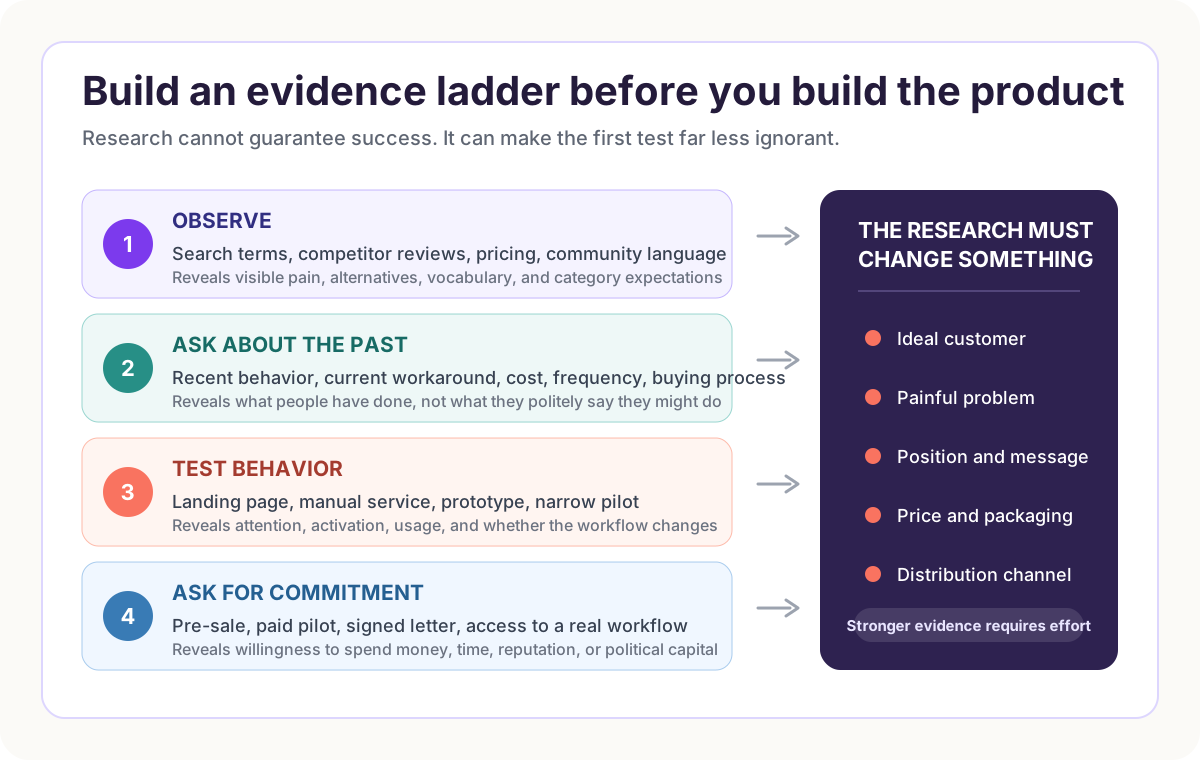
You can read hundreds of competitor reviews and sort complaints by customer type, workflow, and severity. You can compare pricing, packaging, positioning, integrations, documentation, and release histories. Search results reveal the words buyers use. Community discussions reveal the workarounds they tolerate and the places where they ask for help.
Harvard Business School's startup market research guidance separates this into secondary research, using existing market and competitor information, and primary research gathered directly through interviews, surveys, and other customer contact. Both are available before a founder writes much code.
None of that proves the product will work. It does give you a better starting position than a blank page and personal enthusiasm.
Research should force you to take a position
A useful research phase ends with choices. Who is the first customer? Which problem is painful enough to deserve a budget? What do they call it? Which alternative are they replacing? Why would they trust you? What price fits the value and the buying process? Where can you reach them without lighting money on fire?
If the answer is still "everyone who needs better software," you have collected information without making a decision.
Your initial position will be wrong in places. That is expected. It should still be specific enough that a launch can challenge it.
Do not ask customers to approve your idea
Founders ruin customer interviews by turning them into polite sales calls. "Would you use this?" and "Do you like this idea?" invite encouragement, not evidence.
Strategyzer warns against mistaking customer opinions for facts. Ask about the last time the problem happened. What did the customer do? What did it cost? Who noticed? Which workaround did they use? Why have they not replaced it already?
Past behavior is imperfect evidence. It is still more useful than a compliment about a hypothetical product.
You still have to launch
Research can become another hiding place. You cannot interview your way to retention, and no competitive spreadsheet can predict every objection or edge case.
The point is to arrive at development with a set of informed assumptions. Build the smallest credible test of the riskiest one. Watch what customers do. Ask for a commitment that costs them something. Change the position while the cost of changing it is still low.
Harvard's product-market fit guidance makes the same distinction: market research begins the process, but the hypotheses have to keep changing as the product meets real customers.
Questions founders ask about SaaS market research
How do you validate a SaaS idea before building it?
Define a narrow customer and problem, then look for evidence in search behavior, reviews, communities, existing workarounds, and customer interviews. Test the riskiest assumptions with a landing page, manual service, prototype, or paid pilot before committing to a full product.
How much market research should a startup do before launching?
Enough to form specific, testable assumptions about the customer, problem, position, price, and distribution channel. Research should not become an excuse to postpone contact with the market. A few focused weeks can narrow the field, after which small real-world tests should take over.
What should SaaS competitor research include?
Study pricing and packaging, product documentation, customer reviews, support complaints, positioning, integrations, and the channels competitors use to reach buyers. Pay close attention to what customers dislike and the workarounds they still maintain. Those gaps are often more useful than a feature checklist.
Can you prove product-market fit before launch?
No. Product-market fit depends on real usage, retention, and willingness to pay over time. Pre-launch research can show that a painful problem exists and that a specific group is willing to test or buy a solution. It reduces ignorance, but the market still gets the final vote.